
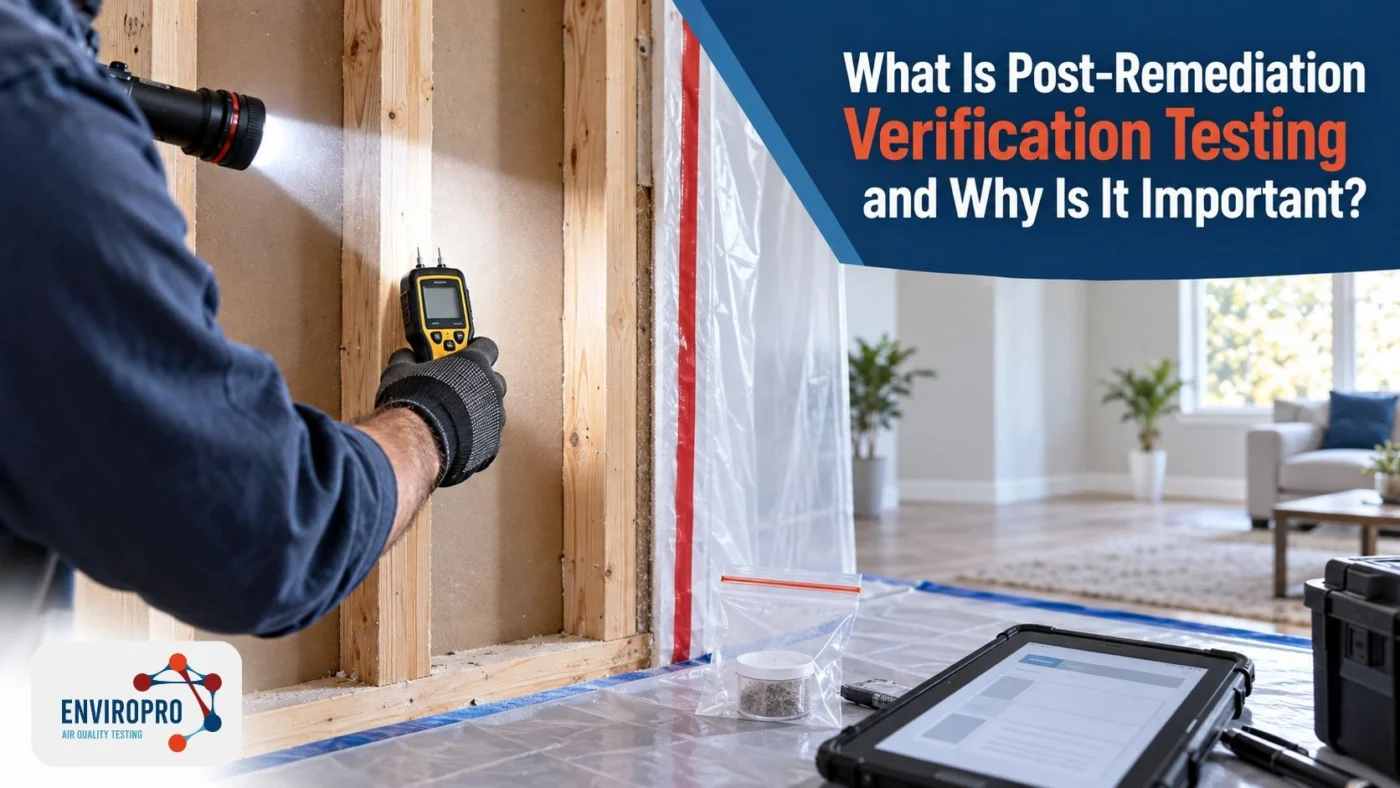
Post-remediation verification testing is an evaluation performed after mold cleanup to determine whether the work area meets the project’s agreed completion criteria. It may combine a visual inspection, moisture measurements, and targeted air or surface sampling; it does not guarantee that a property is mold-free, permanently dry, or free of every health risk. What does […]
Monthly Archives: September 2026
17
Sep
Sep
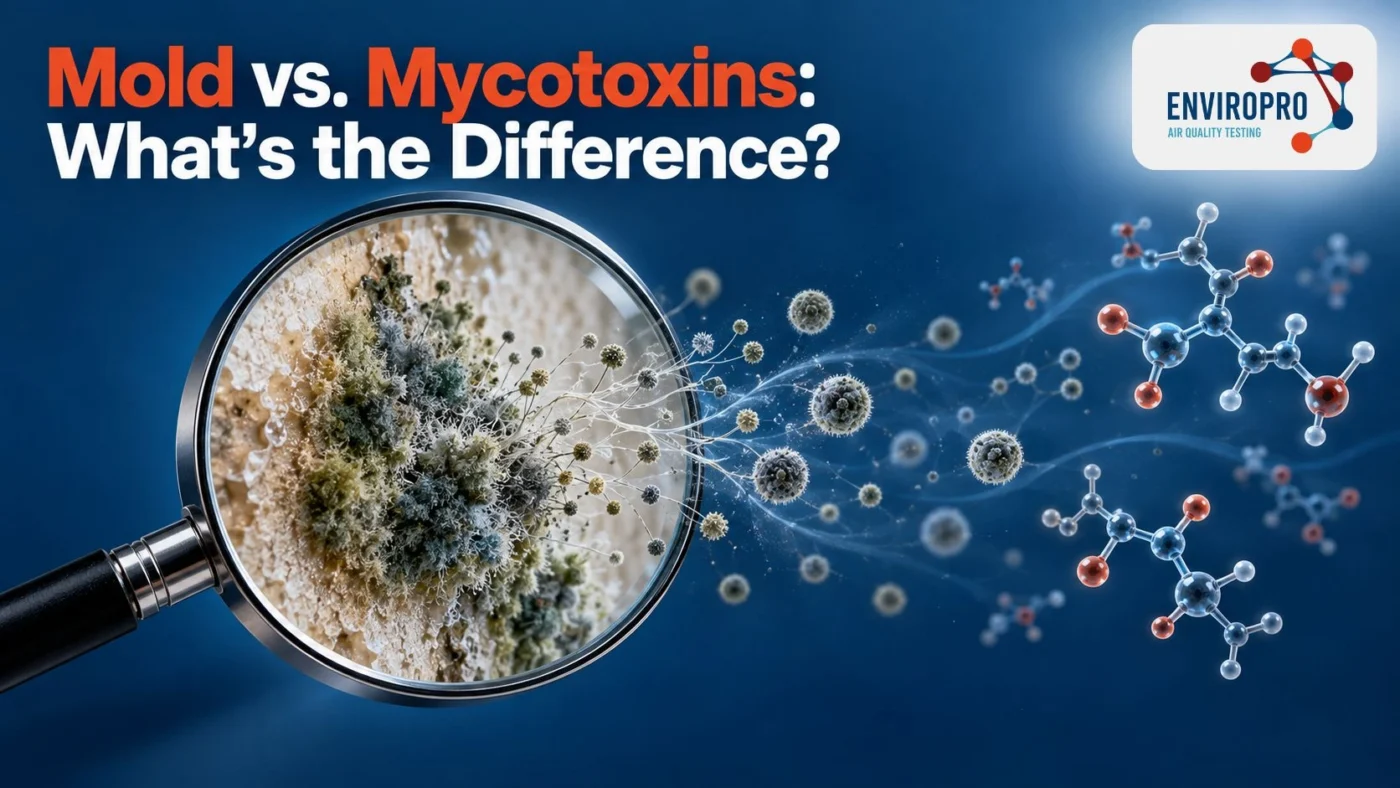
The basic mold vs mycotoxins difference is simple: mold is a living fungus that grows on damp material, while mycotoxins are chemical compounds that certain molds may produce under certain conditions. Mold spores help the organism reproduce and spread; mycotoxins are not spores, are not alive, and are not produced by every mold problem. Mold […]
11
Sep
Sep
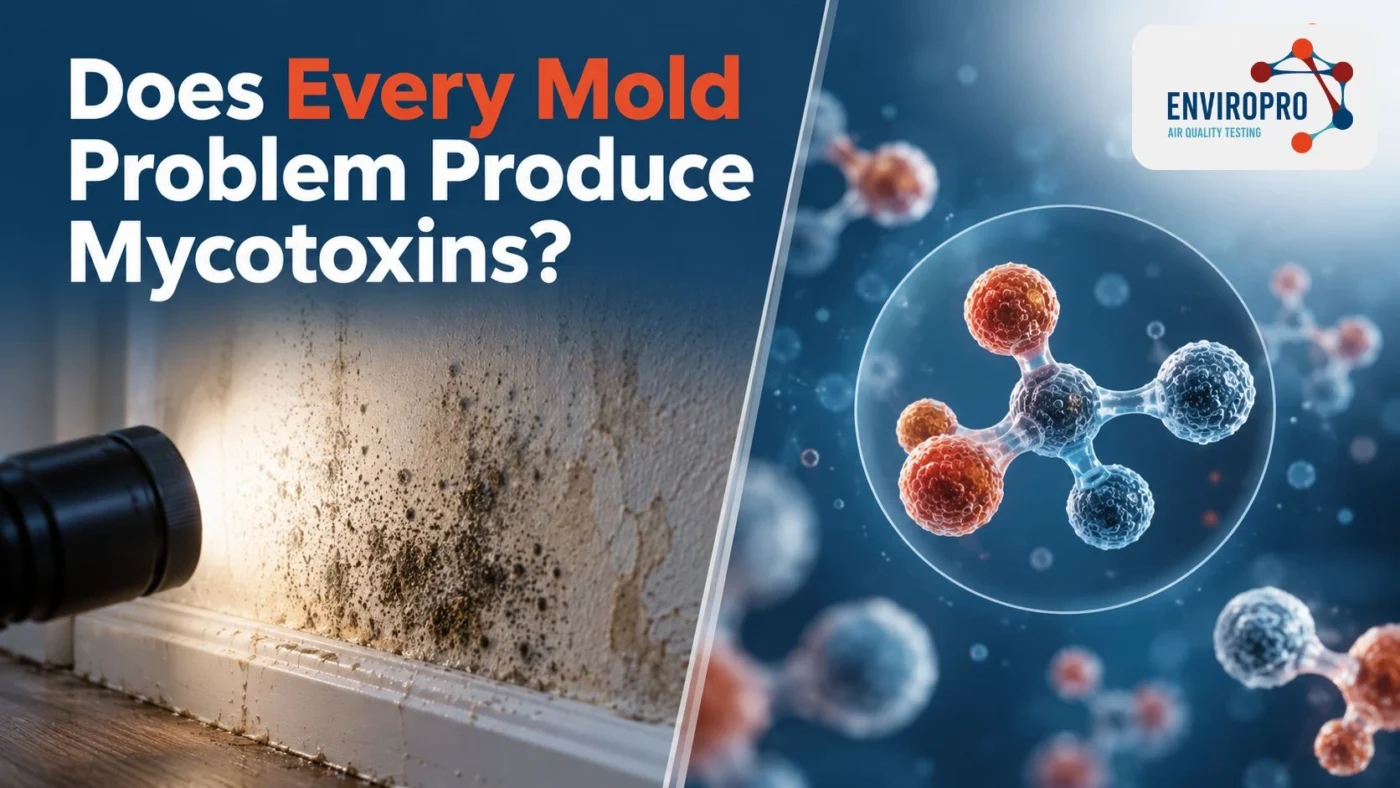
No. The direct answer to does every mold problem produce mycotoxins is that only some molds can make these compounds, and even capable species do so only under certain conditions. Finding mold does not automatically prove that mycotoxins are present, and finding a mold type associated with toxin production does not prove that a person’s […]
05
Sep
Sep
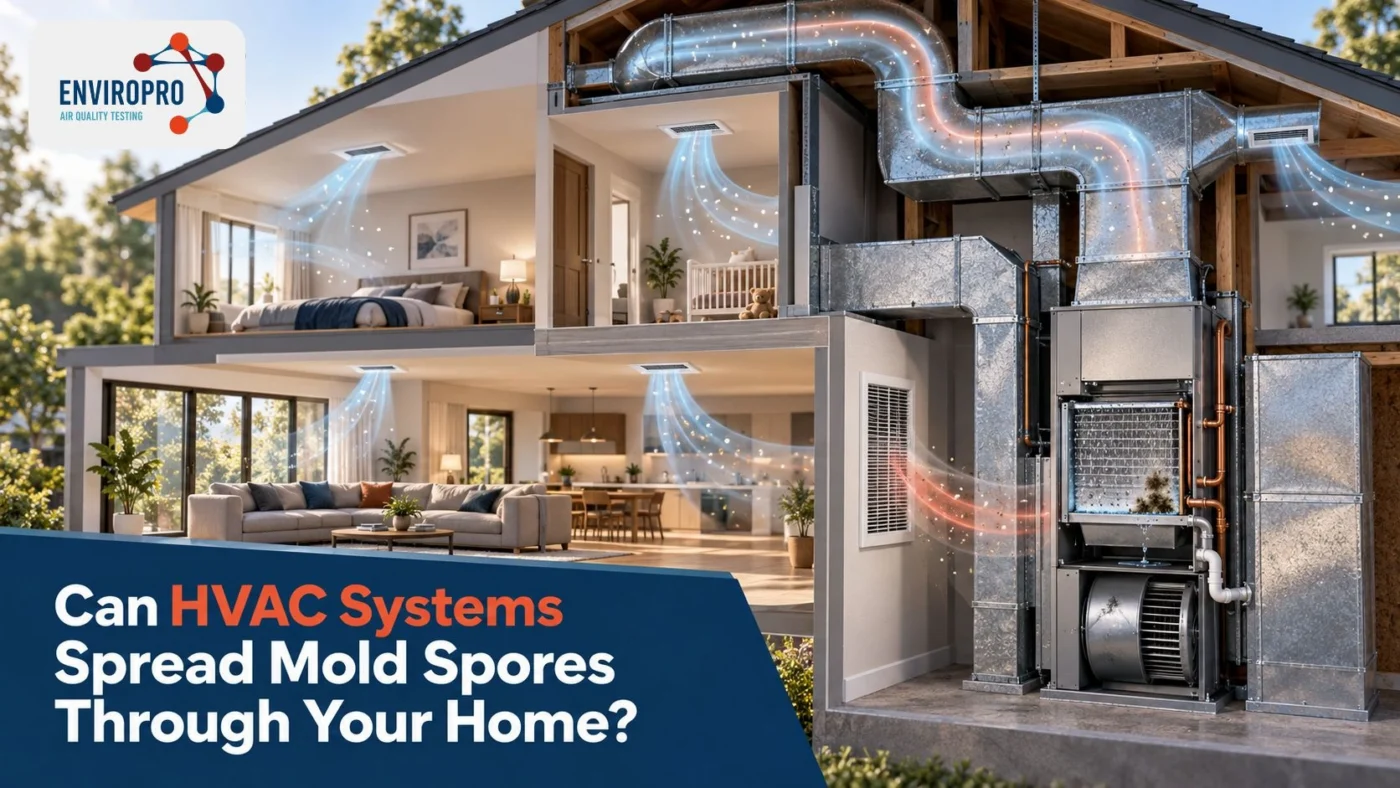
Yes, HVAC systems can spread mold spores when mold is growing inside the equipment or ductwork, or when return air pulls spores from another contaminated area and redistributes them. The system does not create mold on its own; growth requires moisture and a suitable surface, and ordinary household dust near a vent is not proof […]