
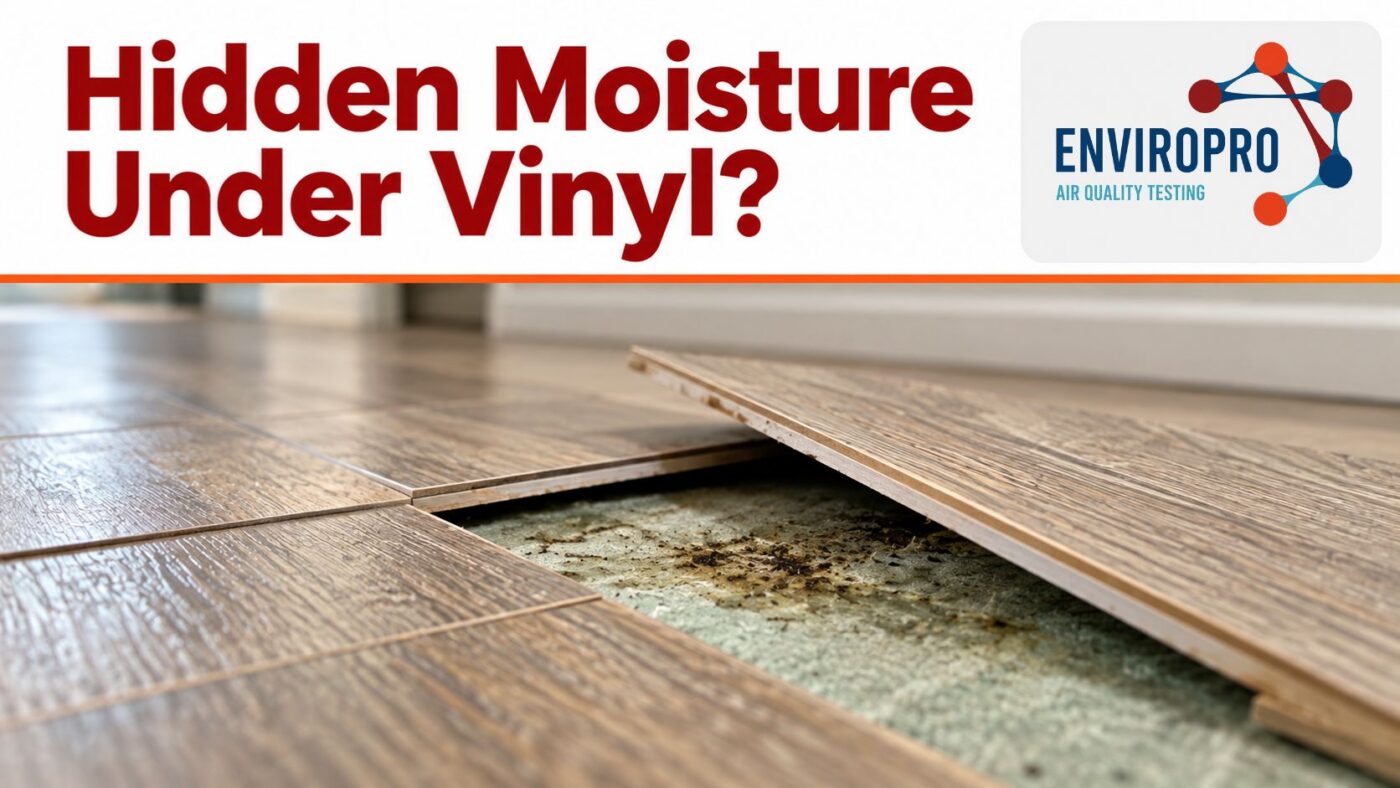
Yes, mold under vinyl plank flooring can develop after a leak when moisture becomes trapped beneath the finished floor and materials that can support growth remain wet. The vinyl plank itself may resist water, but that does not mean the underlayment, plywood, OSB, drywall edges, adhesives, dust, or other material beneath and around it stayed […]
Category Archives: mold inspection
17
Oct
Oct
You should consider a mold inspection before buying a home in Las Vegas if the property has signs of or a history of moisture problems, such as musty odors, water stains, plumbing or roof leaks, previous flooding, damaged flooring, suspicious repairs, or unexplained dampness. A separate mold inspection is not automatically necessary for every house. […]
11
Oct
Oct
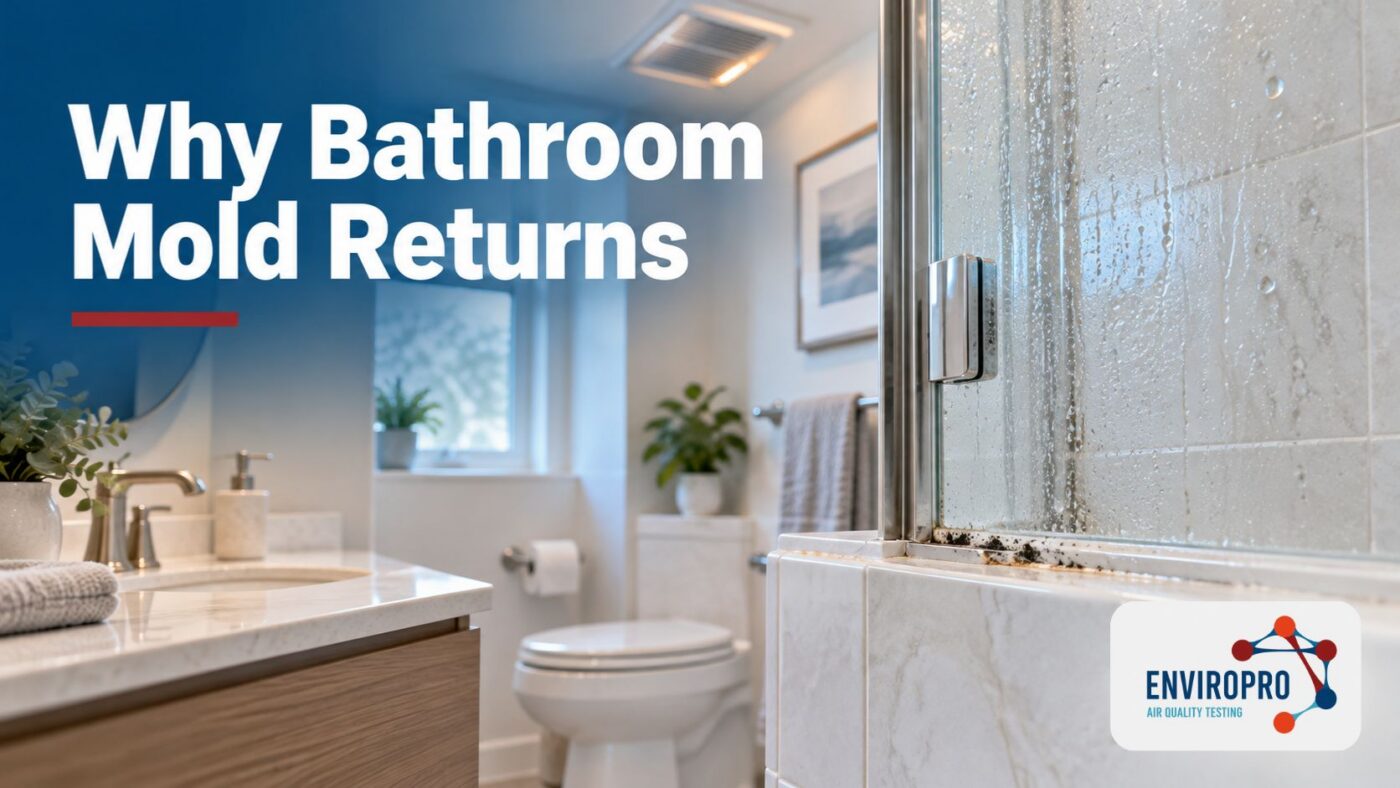
If bathroom mold keeps coming back, the most likely reason is that the moisture allowing it to grow has not been corrected. Cleaning can remove visible material, but recurring shower condensation, poor bathroom ventilation, a slow plumbing leak, damp drywall, failing caulk, or moisture behind tile can recreate the same conditions. In a Las Vegas […]
05
Oct
Oct
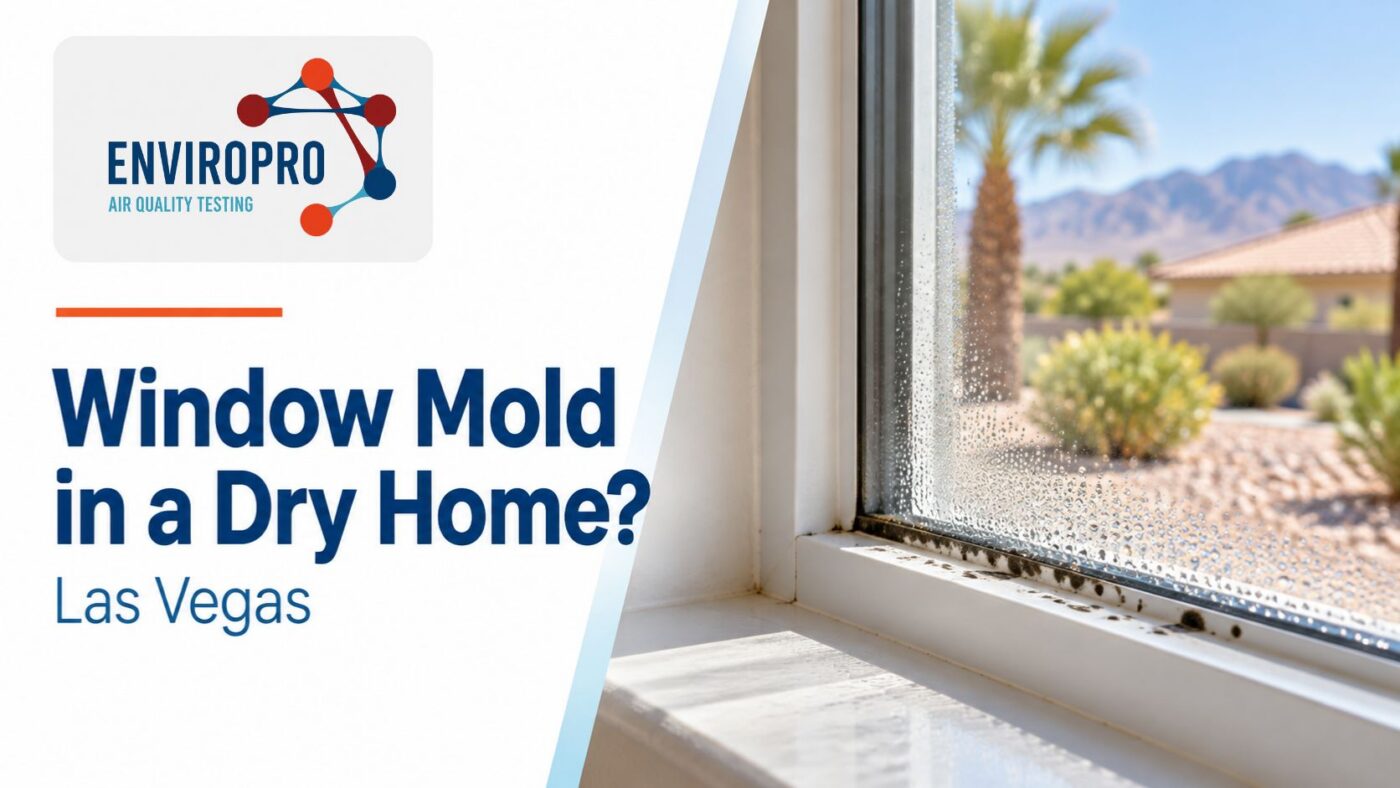
Yes, mold around windows can develop in a Las Vegas home even when the outdoor climate feels extremely dry. Mold does not need humid outdoor weather. It needs moisture at the surface where it is growing, and that moisture may come from condensation on windows, a plumbing or exterior leak, trapped indoor humidity, or water […]

17
Sep
Sep
The basic mold vs mycotoxins difference is simple: mold is a living fungus that grows on damp material, while mycotoxins are chemical compounds that certain molds may produce under certain conditions. Mold spores help the organism reproduce and spread; mycotoxins are not spores, are not alive, and are not produced by every mold problem. Mold […]

11
Sep
Sep
No. The direct answer to does every mold problem produce mycotoxins is that only some molds can make these compounds, and even capable species do so only under certain conditions. Finding mold does not automatically prove that mycotoxins are present, and finding a mold type associated with toxin production does not prove that a person’s […]

05
Sep
Sep
Yes, HVAC systems can spread mold spores when mold is growing inside the equipment or ductwork, or when return air pulls spores from another contaminated area and redistributes them. The system does not create mold on its own; growth requires moisture and a suitable surface, and ordinary household dust near a vent is not proof […]
17
Aug
Aug
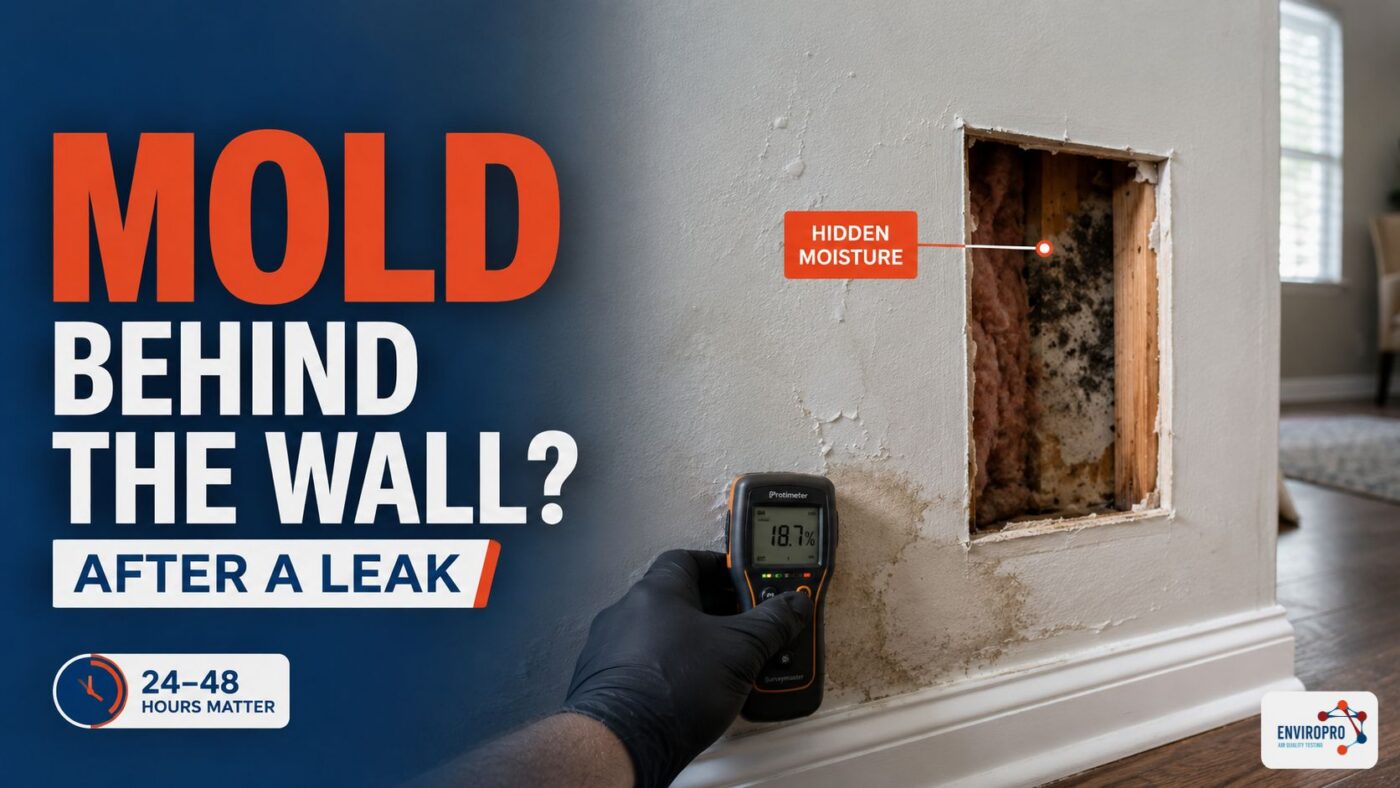
Yes, mold behind walls after a leak can develop when drywall, insulation, wood framing, or other materials remain damp. Fixing the pipe or roof stops additional water from entering, but it does not automatically dry moisture already trapped inside the wall. The U.S. Environmental Protection Agency recommends drying wet materials within 24–48 hours after a […]
05
Aug
Aug
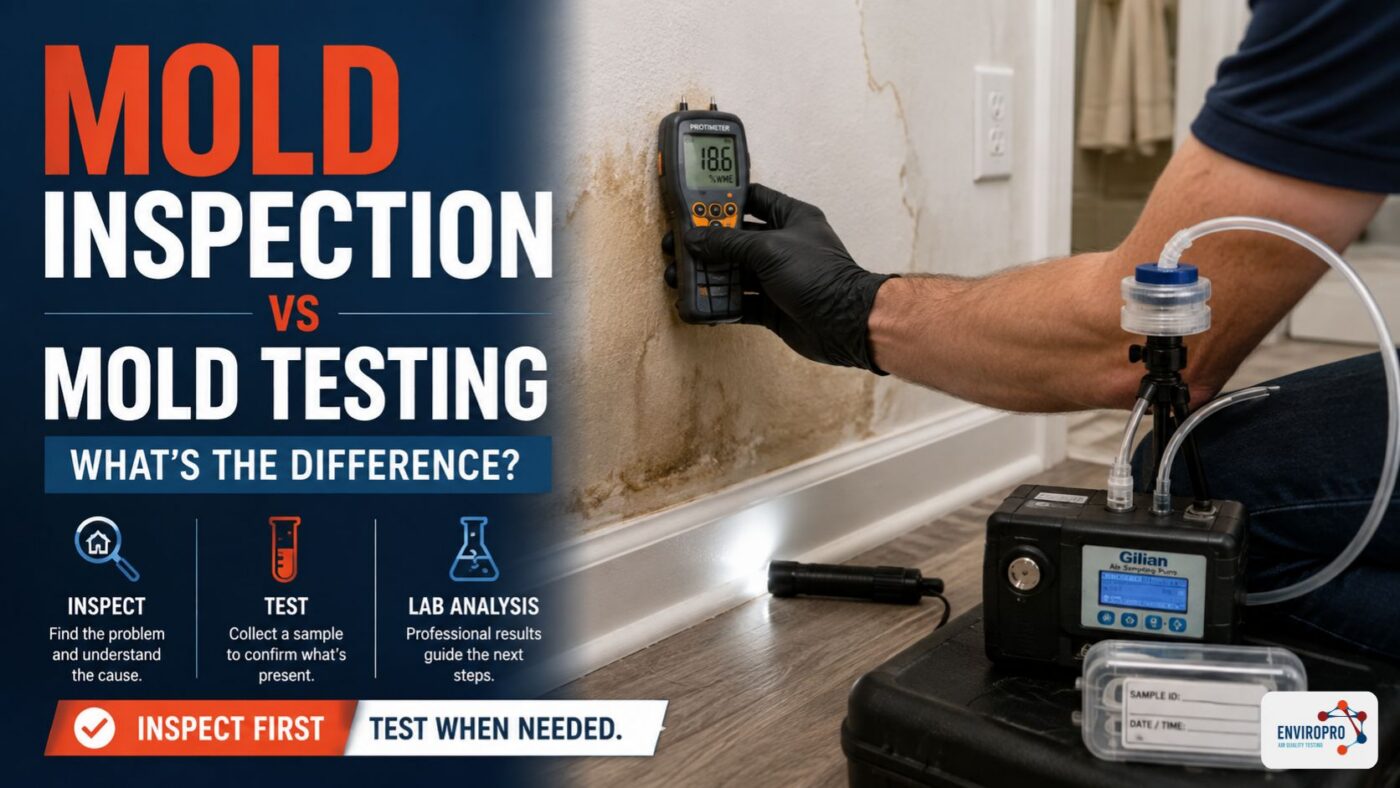
The difference between mold inspection vs mold testing is straightforward: a mold inspection examines the property for visible growth, water damage, excess moisture, and conditions that may support mold, while mold testing collects air, surface, or material samples for laboratory analysis. An inspection helps answer where the problem may be and what caused it; testing […]
25
Jul
Jul
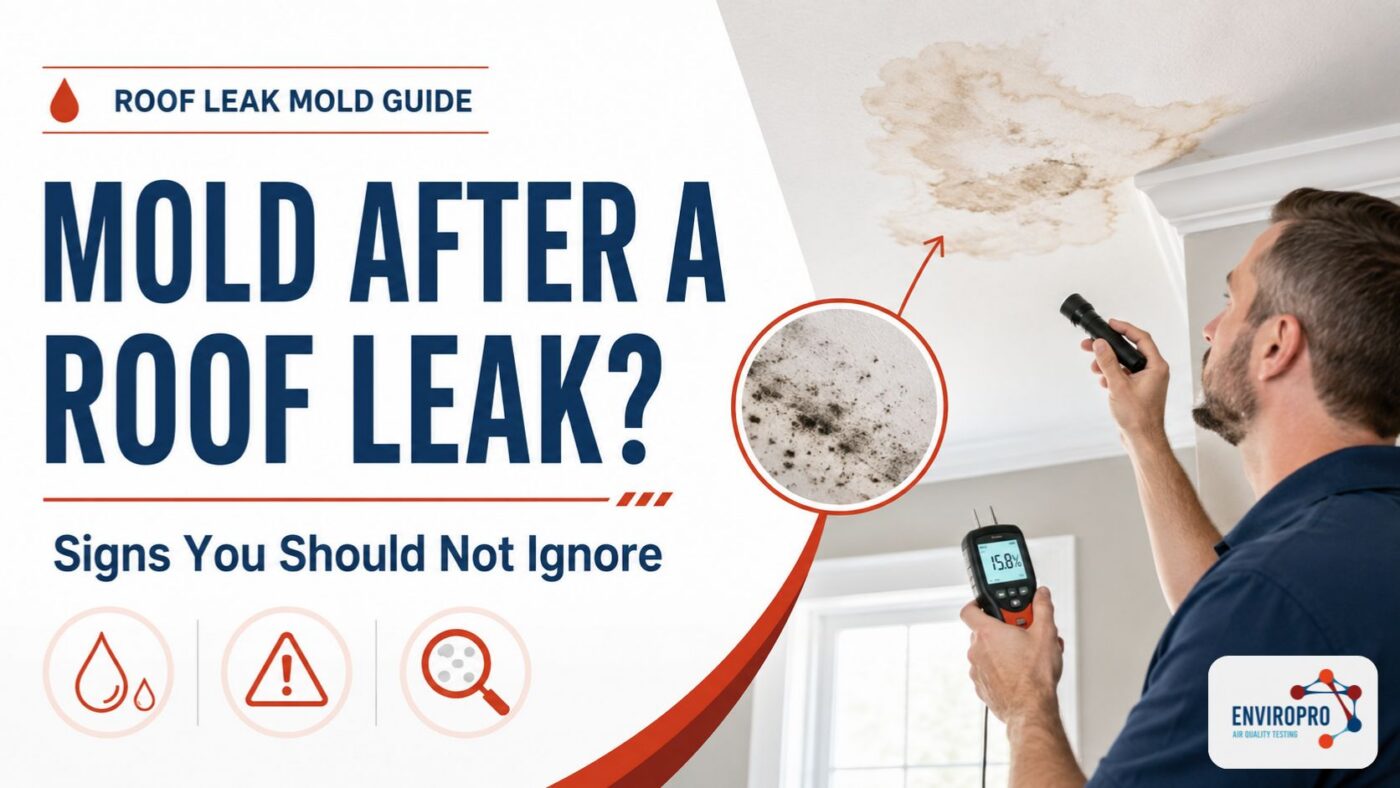
Mold after a roof leak can grow when moisture gets trapped in ceiling drywall, insulation, attic materials, or wall cavities. The signs you should not ignore include ceiling water stains, a musty odor, soft drywall, peeling paint, dark spots near vents or corners, and any stain that returns after rain. A roof repair stops new […]
- 1
- 2