
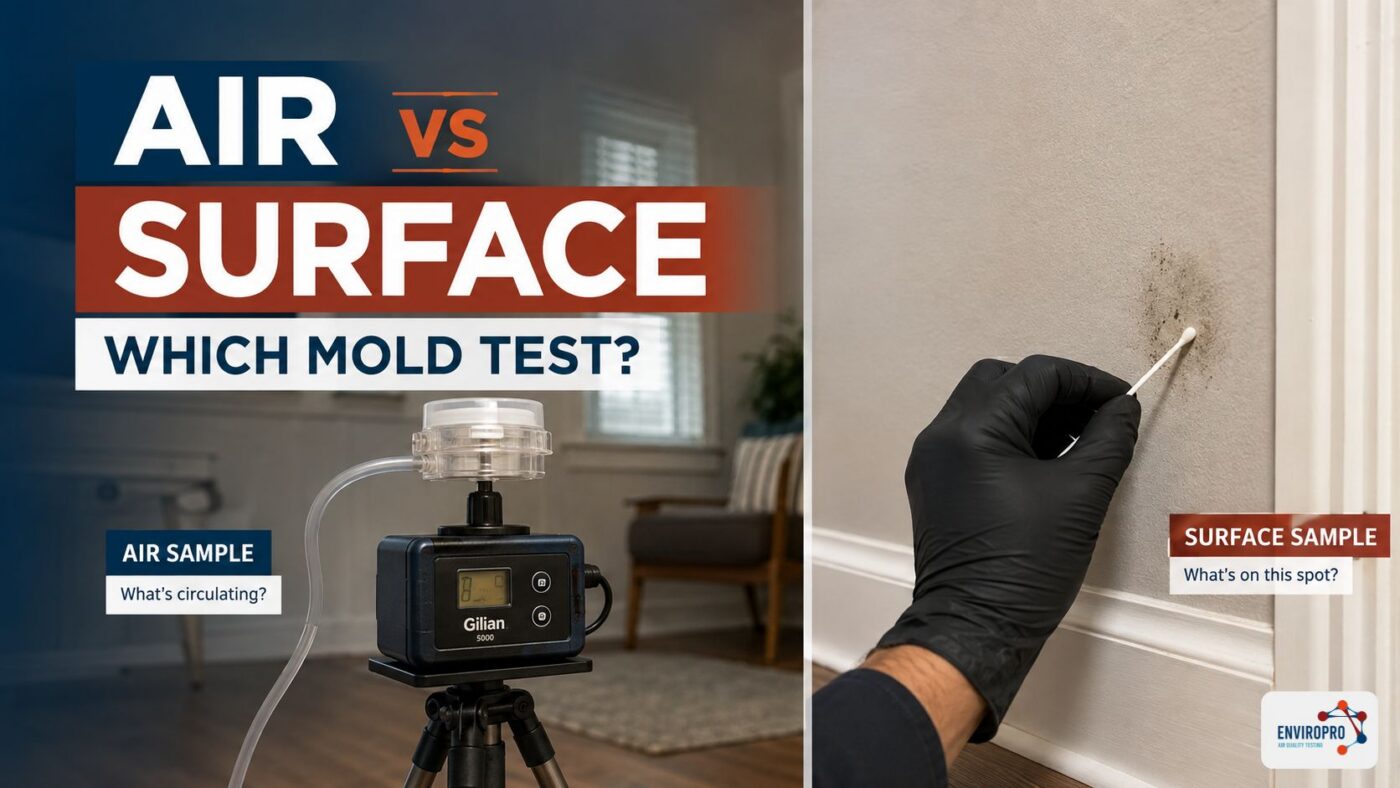
When comparing air mold testing vs surface mold testing, the right choice depends on the question you need answered. Air testing measures mold spores circulating in a room, while surface testing examines material collected from one specific spot. If you smell mold but cannot see it, air testing may provide useful clues. If you have […]
Monthly Archives: August 2026
17
Aug
Aug
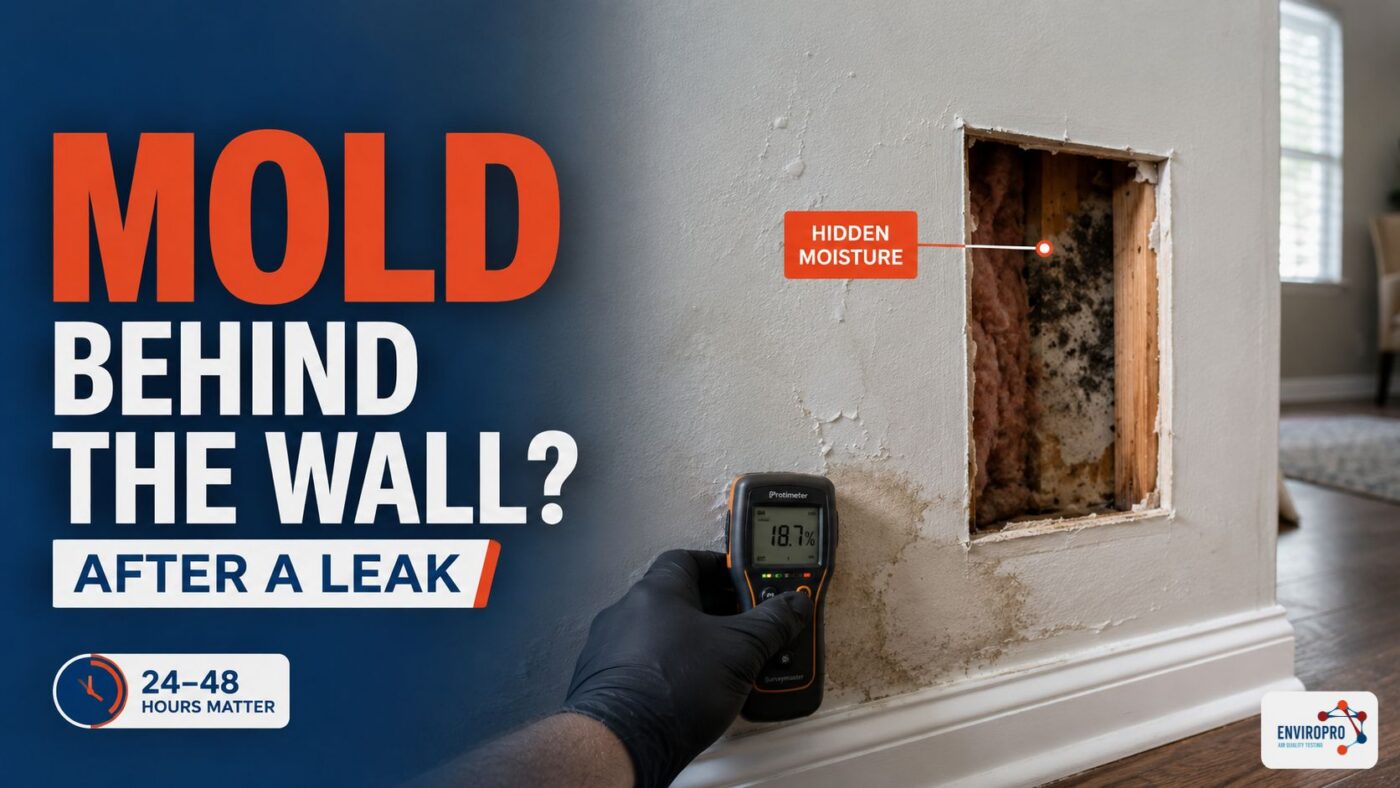
Yes, mold behind walls after a leak can develop when drywall, insulation, wood framing, or other materials remain damp. Fixing the pipe or roof stops additional water from entering, but it does not automatically dry moisture already trapped inside the wall. The U.S. Environmental Protection Agency recommends drying wet materials within 24–48 hours after a […]
11
Aug
Aug
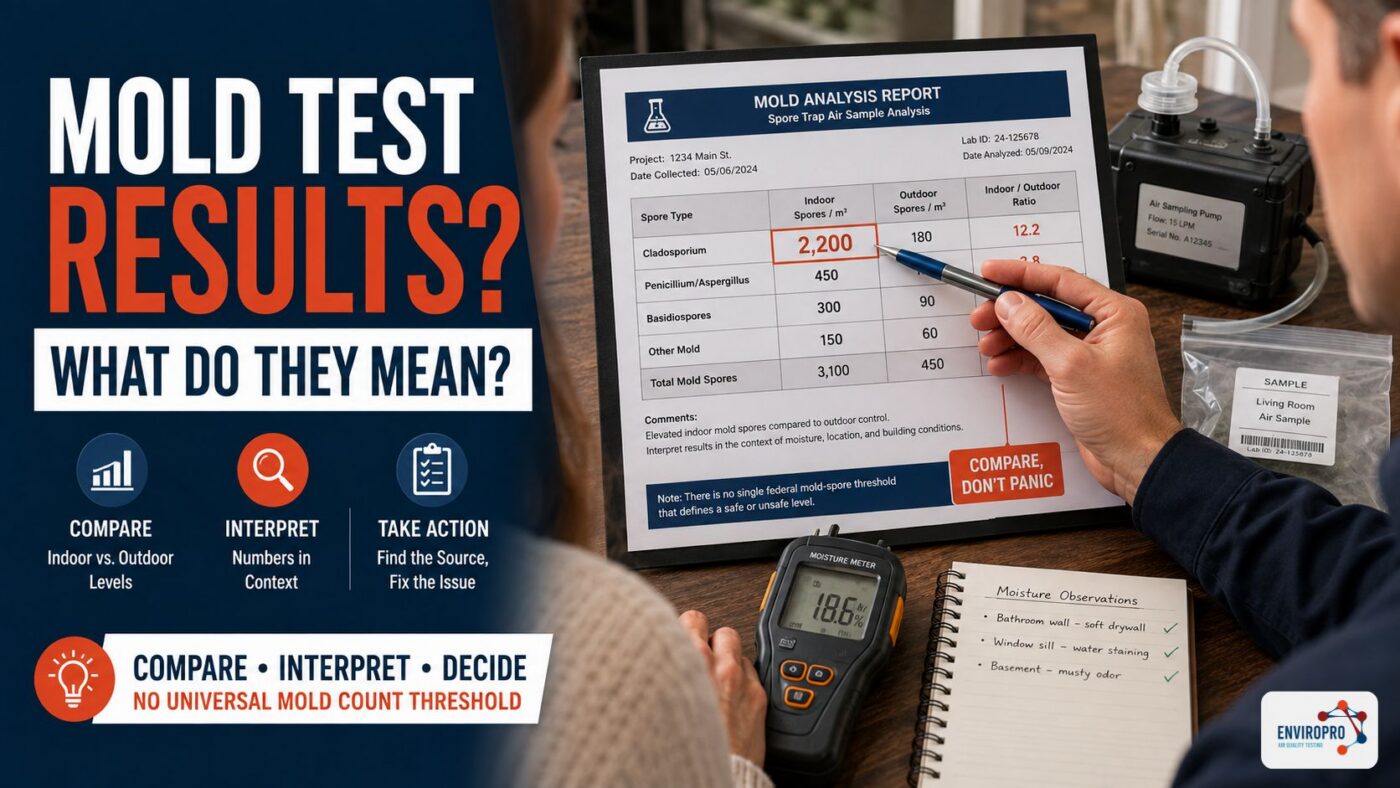
They show which mold spores or materials were detected in the samples, how much was found, and whether the indoor pattern suggests a possible mold source. The numbers should not be judged alone. A useful interpretation also considers the outdoor control sample, the rooms tested, visible damage, moisture readings, odors, and the type of sample […]
05
Aug
Aug
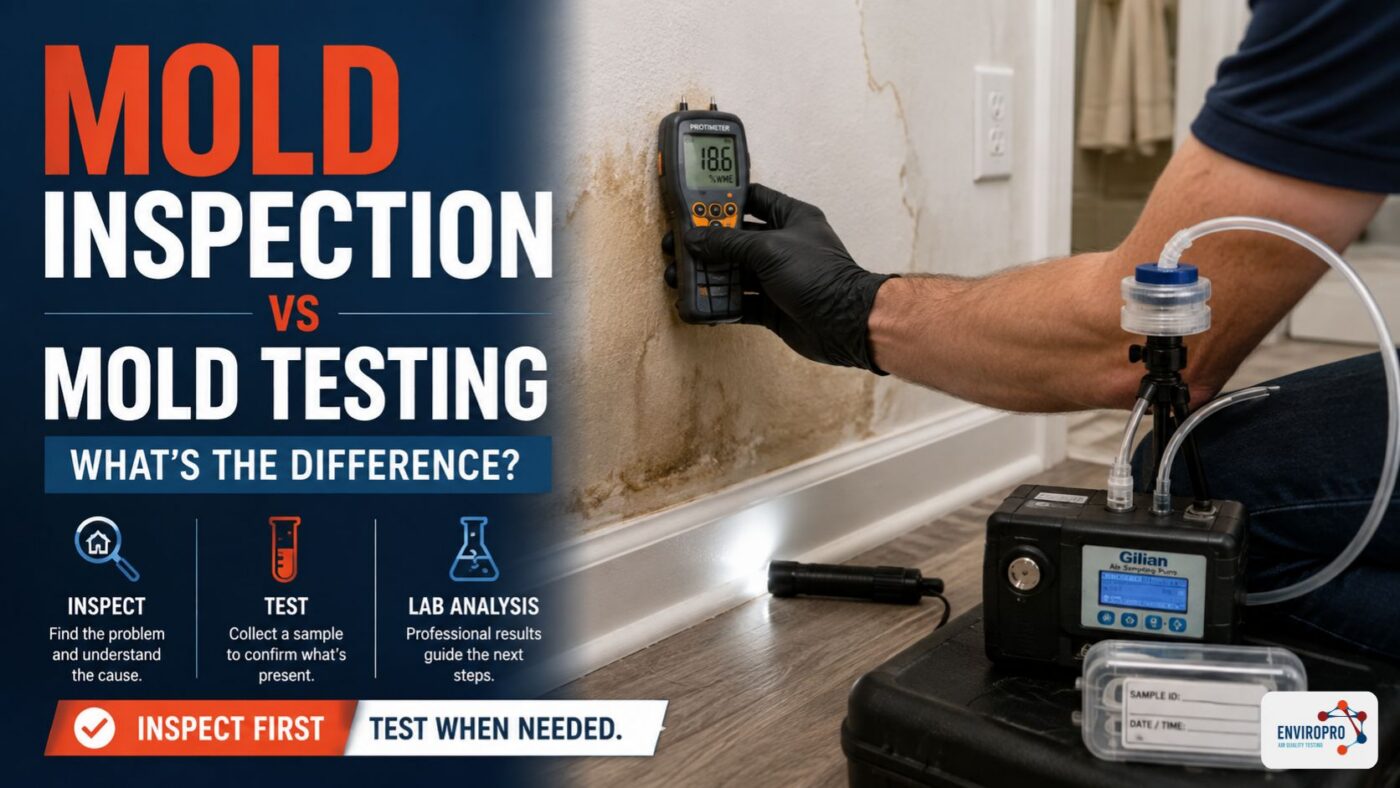
The difference between mold inspection vs mold testing is straightforward: a mold inspection examines the property for visible growth, water damage, excess moisture, and conditions that may support mold, while mold testing collects air, surface, or material samples for laboratory analysis. An inspection helps answer where the problem may be and what caused it; testing […]