
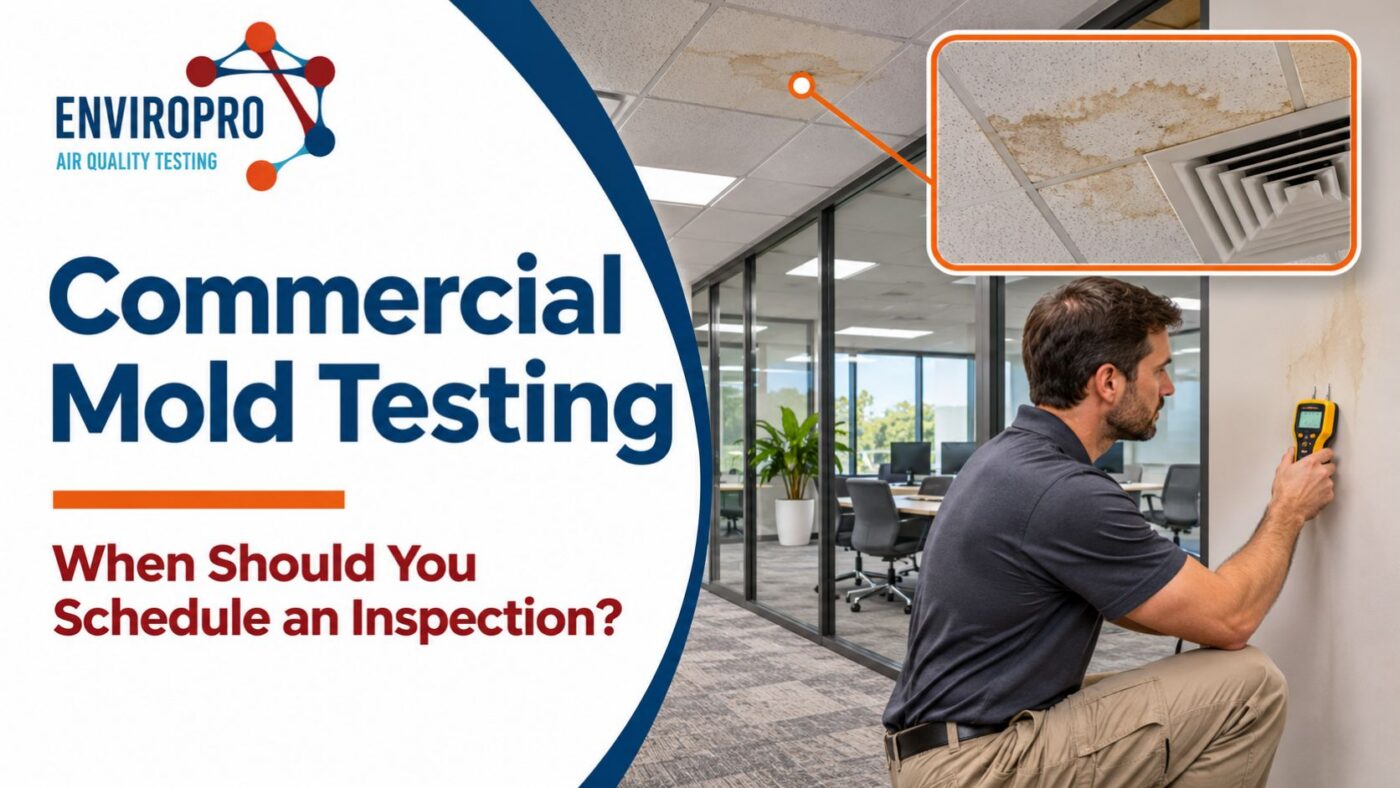
Commercial mold testing is worth considering when a business property has unresolved water damage, persistent musty odors, suspected hidden mold, or recurring moisture problems. An inspection can help business owners and property managers understand the condition of affected areas and decide whether laboratory sampling is useful. However, not every building needs routine mold testing. The […]
Tag Archives: mold testing
11
Nov
Nov
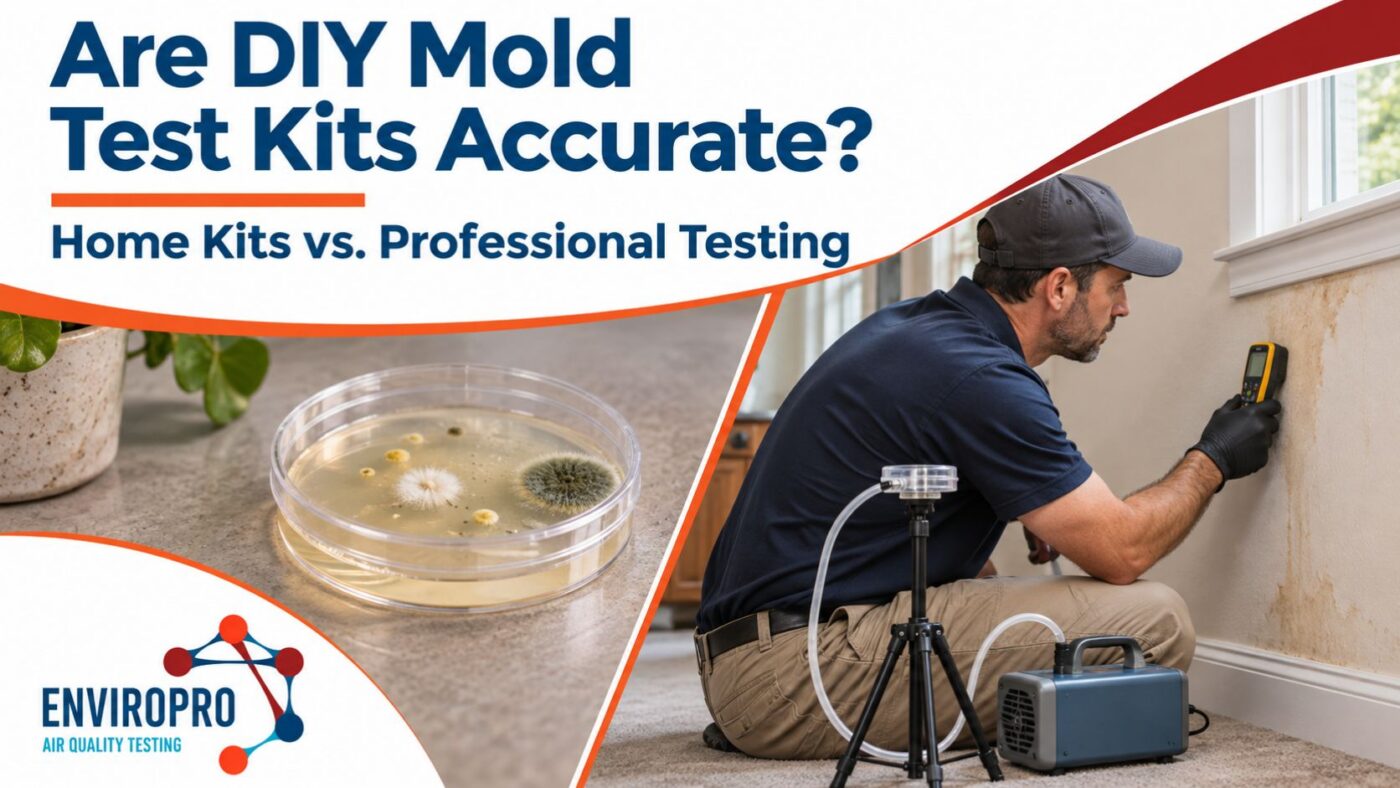
Are DIY mold test kits accurate? Some kits can detect or identify mold in a collected sample, but that doesn’t mean they can reliably determine whether your home has a significant mold problem. Many inexpensive kits simply show that mold spores are present, which is normal in indoor environments. Professional mold testing can provide more […]
05
Nov
Nov
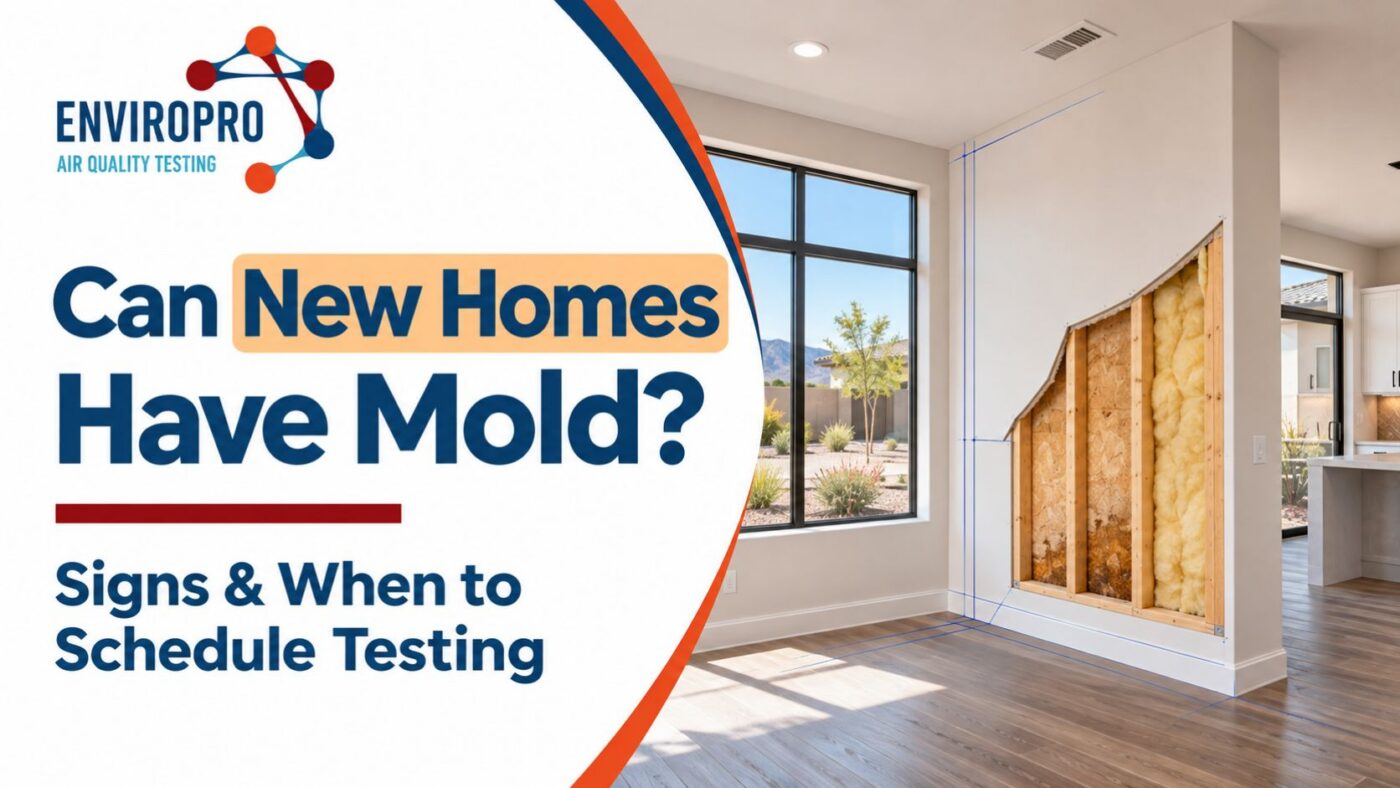
Yes, mold in new construction homes is possible, even before anyone moves in. A newly built house may have fresh paint, new flooring, and modern plumbing, but that doesn’t mean every building material remained dry throughout construction. Rain exposure, plumbing leaks, damp lumber, trapped moisture, and air-conditioning problems can create conditions for mold growth. Knowing […]

17
Sep
Sep
The basic mold vs mycotoxins difference is simple: mold is a living fungus that grows on damp material, while mycotoxins are chemical compounds that certain molds may produce under certain conditions. Mold spores help the organism reproduce and spread; mycotoxins are not spores, are not alive, and are not produced by every mold problem. Mold […]
11
Sep
Sep
No. The direct answer to does every mold problem produce mycotoxins is that only some molds can make these compounds, and even capable species do so only under certain conditions. Finding mold does not automatically prove that mycotoxins are present, and finding a mold type associated with toxin production does not prove that a person’s […]
17
Aug
Aug
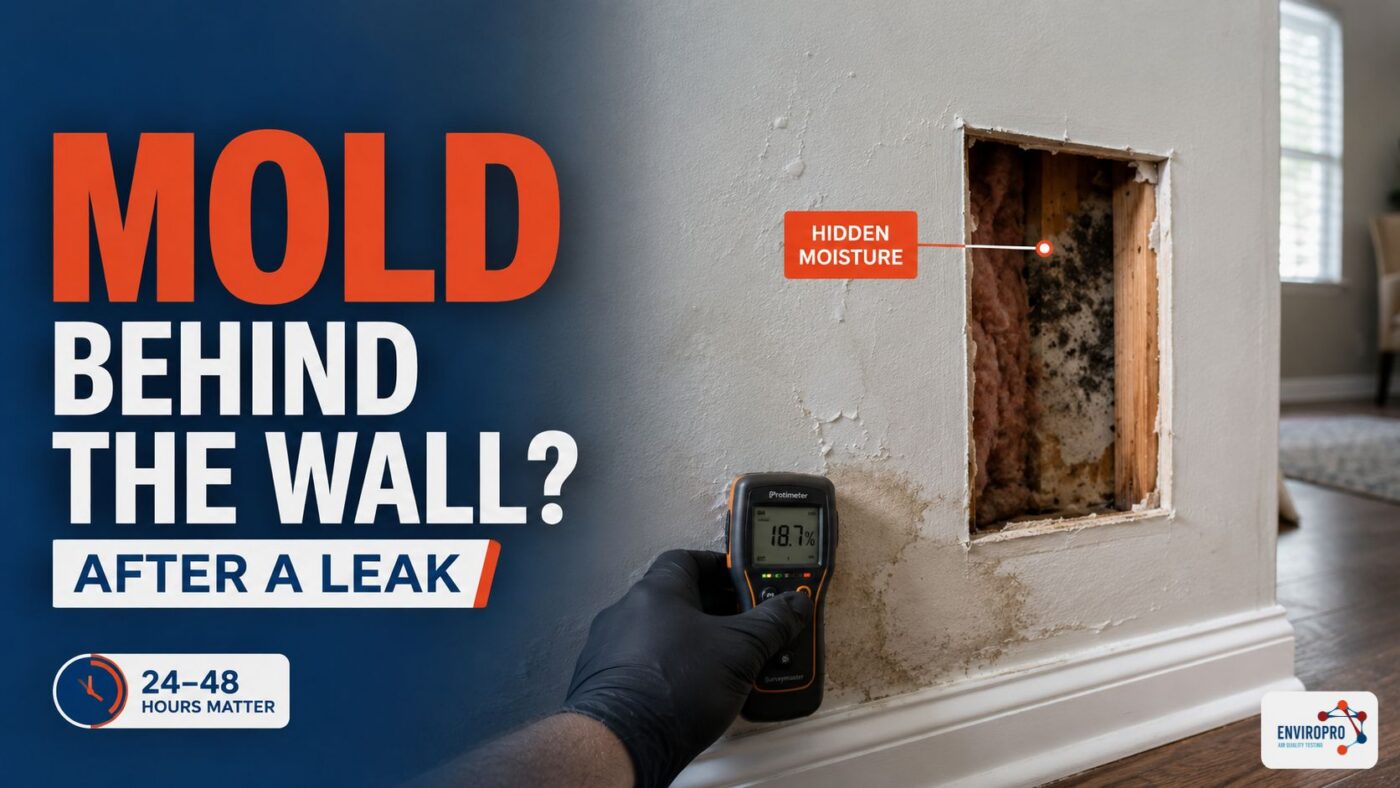
Yes, mold behind walls after a leak can develop when drywall, insulation, wood framing, or other materials remain damp. Fixing the pipe or roof stops additional water from entering, but it does not automatically dry moisture already trapped inside the wall. The U.S. Environmental Protection Agency recommends drying wet materials within 24–48 hours after a […]
11
Aug
Aug
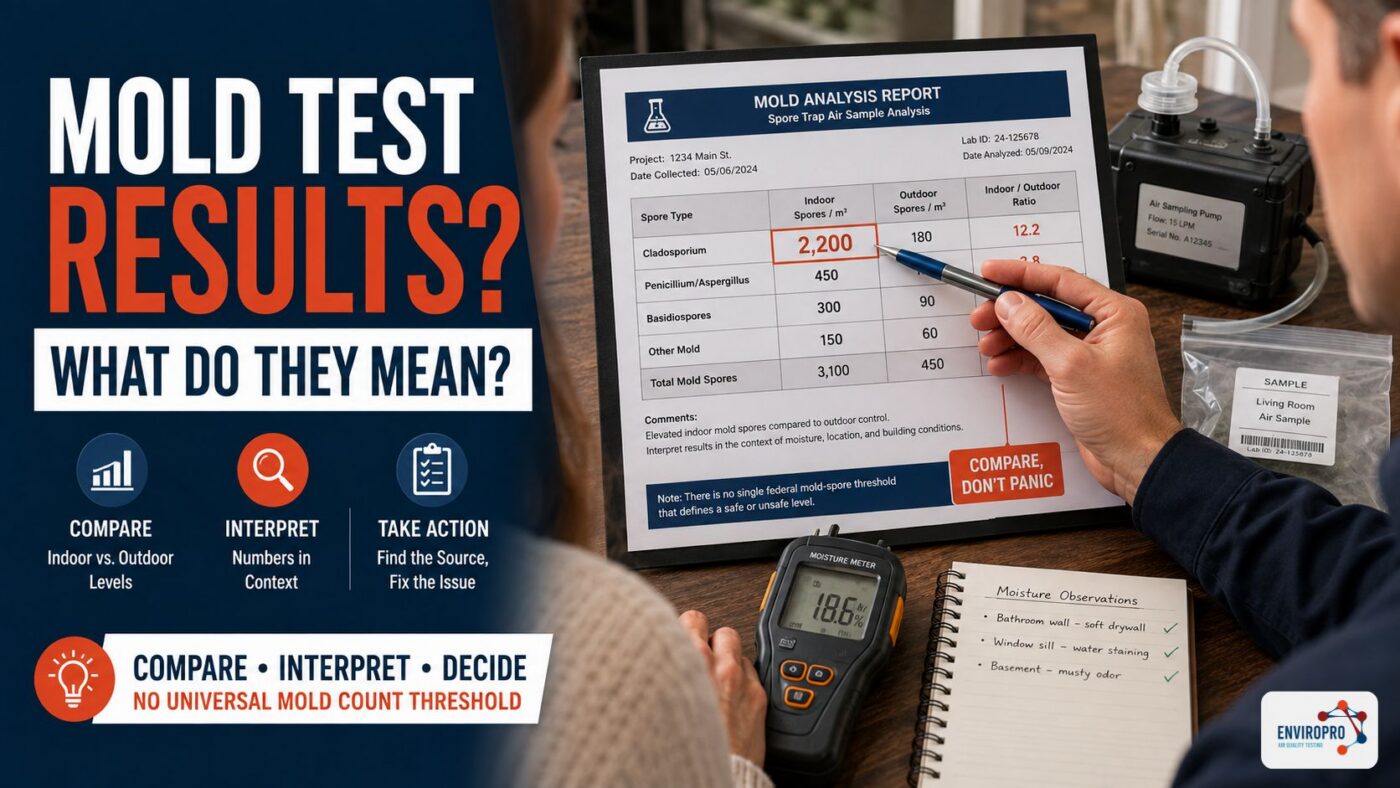
They show which mold spores or materials were detected in the samples, how much was found, and whether the indoor pattern suggests a possible mold source. The numbers should not be judged alone. A useful interpretation also considers the outdoor control sample, the rooms tested, visible damage, moisture readings, odors, and the type of sample […]
15
Jul
Jul
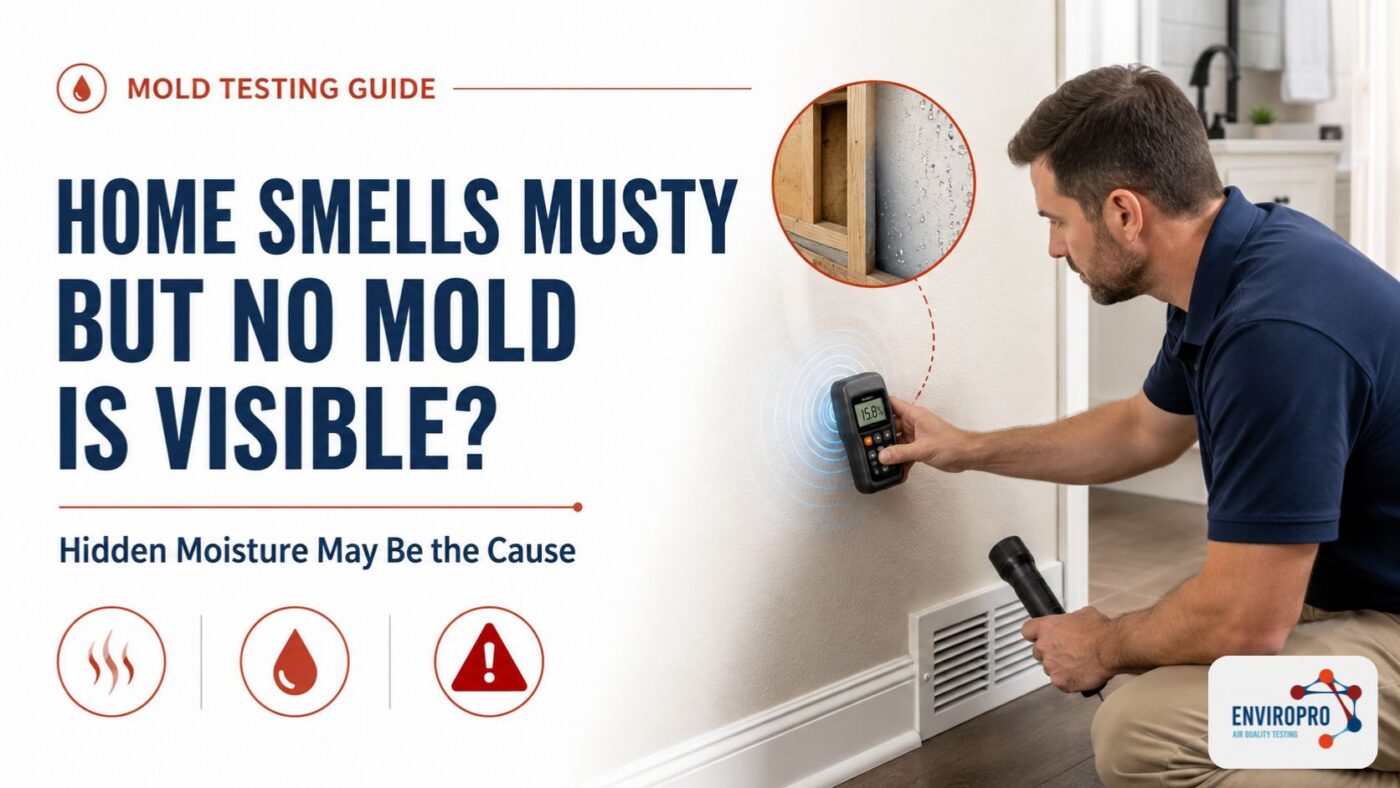
If your home smells musty but no mold is visible, the most likely cause is hidden moisture somewhere in the property. That moisture may be feeding hidden mold, mildew, bacteria, damp building materials, or stale air trapped in a poorly ventilated space. Sometimes the issue is not mold at all, but a leak, dirty HVAC […]