
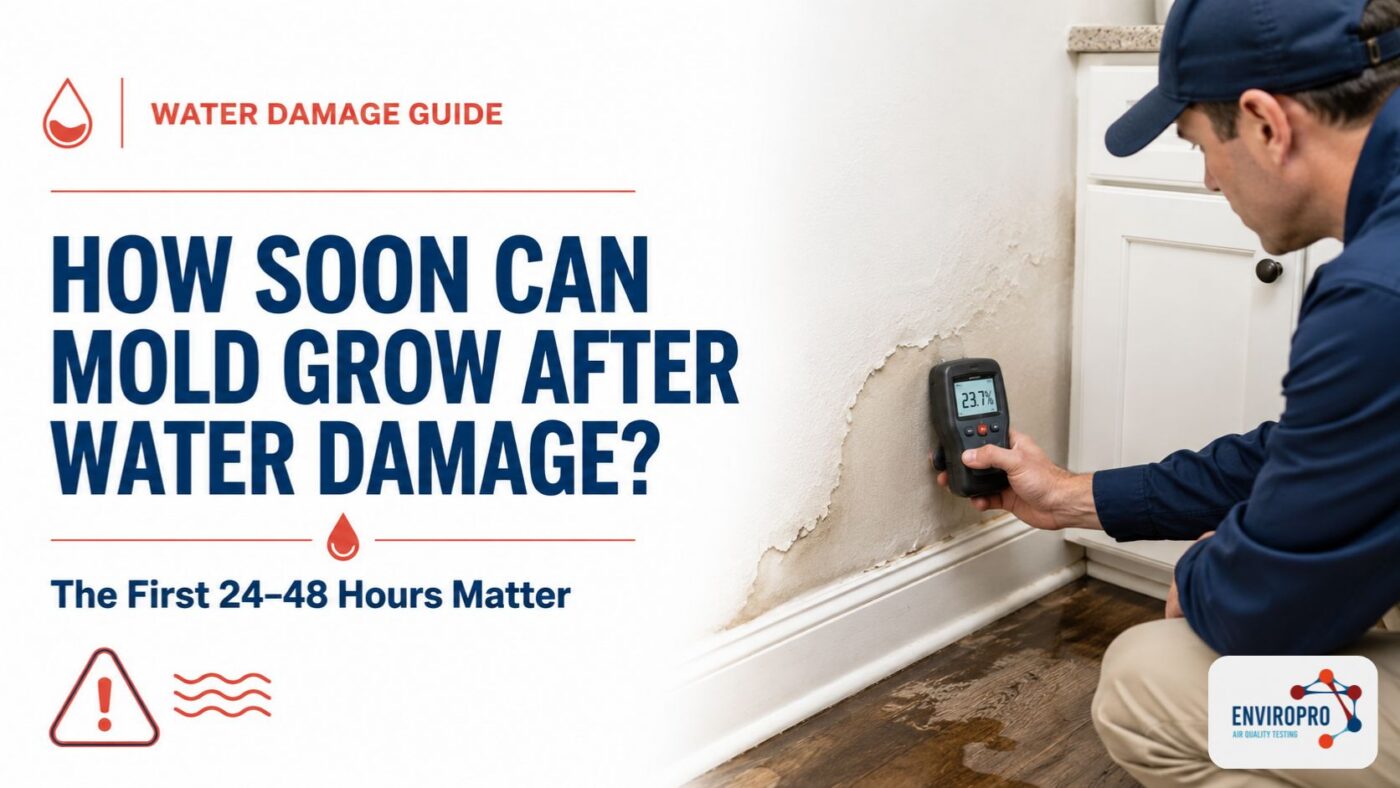
How soon can mold grow after water damage? In many homes, mold can begin developing within 24 to 48 hours if wet materials are not dried properly. That does not always mean you will see mold right away, but it does mean the moisture clock starts fast, especially when water reaches drywall, carpet padding, insulation, cabinets, or wall cavities. The EPA says water-damaged areas and items should be dried within 24 to 48 hours to help prevent mold growth.
For property owners in Las Vegas, the desert climate can be misleading. A room may feel dry, while moisture is still trapped behind baseboards, under flooring, inside cabinets, or behind drywall. That is why a water damage mold inspection can be useful after a plumbing leak, roof leak, appliance overflow, AC condensation issue, or flood cleanup.
Why can mold grow so quickly after water damage?
Mold spores are a normal part of indoor and outdoor air. The issue begins when those spores land on a damp surface and have enough moisture to grow. EPA guidance explains that mold will not grow without water or moisture.
After water damage, many building materials give mold what it needs:
- Paper backing on drywall
- Wood framing
- Carpet and carpet padding
- Dust on surfaces
- Ceiling tiles
- Insulation
- Cabinet bases
- Upholstered furniture
This is why mold after water damage is not only about visible puddles. A small supply line leak under a sink can soak the cabinet base. A roof leak can wet insulation before a stain appears on the ceiling. A toilet overflow can push moisture under the flooring.
In short: mold grows fast because water gives existing spores the chance to settle, feed, and spread on damp materials.
Can mold grow in 24 hours?
Yes, can mold grow in 24 hours? It can begin in that early window if conditions are right, but visible mold may take longer to show. The safer rule is to treat the first 24 to 48 hours as the key drying period.
The EPA states that, in most cases, mold will not grow if wet items are dried within 24 to 48 hours. That does not mean mold always appears at hour 49. It means delayed drying raises the risk, especially with porous materials.
Here is a practical timeline:
|
Time after water damage |
What may be happening |
What to do |
|
0 to 24 hours |
Water is soaking into porous materials. Surfaces may look manageable. |
Stop the water source, remove standing water, start drying, and document damage. |
|
24 to 48 hours |
Damp materials may support early mold activity. Hidden areas are at higher risk. |
Check moisture, improve airflow, use dehumidification, and consider inspection if water has entered the walls or floors. |
|
2 to 7 days |
Odors, staining, swollen trim, or visible growth may begin to appear. |
Do not ignore musty smells. Schedule a mold inspection after a leak if moisture may be trapped. |
|
1 week or longer |
Mold may be more established, especially in wall cavities or under flooring. |
Testing and professional guidance may be needed before repairs or repainting. |
In short: do not wait for black spots. Mold risk starts before most people can see it.
Why Las Vegas homes can still develop mold after leaks
Las Vegas is dry outside, but indoor water damage creates its own environment. A wet wall cavity, damp carpet pad, or saturated cabinet base does not dry just because the outdoor air is dry.
In fact, several Las Vegas home conditions can hide moisture:
- AC condensation leaks
- Slab leaks
- Supply line leaks under sinks
- Roof leaks after storms
- Irrigation water intrusion near exterior walls
- Poor bathroom ventilation
- Laundry room overflows
- Water heater leaks in garages or closets
A dry climate can also give a false sense of safety. The surface may feel dry while moisture remains behind paint, under vinyl plank flooring, or inside insulation. That is where hidden mold detection and moisture readings matter.
Enviropro Mold & Mycotoxin Testing serves Las Vegas and nearby areas with inspections that may include moisture detection, thermal imaging, humidity readings, air sampling, surface sampling, and lab-tested results. The company states that it provides mold testing and inspection services for homeowners, renters, property managers, and businesses in Las Vegas.
In short: Las Vegas homes can still grow mold when water gets trapped where air cannot reach.
Where mold commonly hides after water damage
Visible mold is only one clue. After water damage, the bigger concern is often what you cannot see.
Common hidden areas include:
Behind drywall
Drywall can look normal on the room side, while the back paper stays damp. If the wall cavity stays wet, mold may develop behind the surface.
Under flooring
Laminate, vinyl plank, carpet padding, and wood floors can trap water below the finished surface. A fan blowing across the top may not dry the layer underneath.
Inside cabinets
Kitchen and bathroom sink leaks often soak the cabinet base, back wall, and toe-kick area. These areas get little airflow.
Around baseboards and trim
Baseboards can wick moisture from floors or walls. Swelling, separation, or staining may mean water traveled farther than expected.
Near HVAC components
If moisture is near ductwork, returns, or air handlers, the issue should be handled carefully. The EPA advises not running an HVAC system if you know or suspect it is contaminated with mold because it could spread mold through the building.
In short: if water entered a wall, floor, cabinet, or HVAC area, surface drying may not tell the whole story.
Signs that water damage may have caused mold
You do not need to panic after every leak. But you should pay attention to changes in the property after water exposure.
Watch for:
- Musty odor after water damage
- Stains on walls, ceilings, or baseboards
- Peeling paint or bubbling drywall
- Warped flooring
- Soft drywall or swollen trim
- Recurring dampness in the same area
- Visible spots that return after cleaning
- Increased allergy-like symptoms indoors
- A room that feels humid or stale
The CDC notes that damp and moldy environments may cause symptoms for some people, including a stuffy nose, sore throat, coughing, wheezing, burning eyes, or skin rash. People with asthma, mold allergies, weakened immune systems, or chronic lung disease may be more sensitive.
If symptoms are present, Enviropro can provide building-related testing information, but medical questions should go to a licensed healthcare provider. That distinction matters. Mold inspectors evaluate the property. Healthcare providers evaluate people.
In short: odor, staining, swelling, recurring dampness, and indoor symptoms after a leak are signs the property deserves closer attention.
What should I do after water damage to prevent mold?
What should I do after water damage to prevent mold? Start by stopping the water source and drying wet materials as quickly as possible. Moisture control is the main mold prevention step.
Use this simple action list:
- Stop the water source
Shut off the supply line, repair the leak, patch the roof issue, or stop the intrusion if it is safe to do so. - Remove standing water
Use towels, a wet vacuum, or professional extraction, depending on the amount of water. - Increase drying
Use fans and dehumidifiers when the water is clean and the area is safe. Do not blow air across suspected mold growth. - Move wet items
Pull furniture, boxes, rugs, and stored items away from wet walls or floors. - Check porous materials
Carpet padding, drywall, insulation, and ceiling tiles may not dry well once saturated. - Measure, do not guess
Moisture meters, humidity readings, and thermal imaging can help locate damp areas that are not visible. - Avoid covering the problem.
Do not paint, caulk, or install new flooring over damp or moldy materials. EPA guidance says moldy surfaces should be cleaned and dried before painting, because paint over mold can peel.
Expert tip: If the area still smells musty after drying, do not assume the odor will “air out.” A musty smell after water damage often means moisture or microbial growth may still be present.
In short: dry fast, verify moisture, and avoid cosmetic repairs until the area is truly dry.
When DIY cleanup may be enough vs. when to call a professional
Some situations are simple. Others need a trained eye.
|
Situation |
DIY may be reasonable |
Call a professional |
|
Small clean-water spill on tile |
Yes, if dried quickly |
If water reached the walls, cabinets, or flooring layers |
|
The sink leak was caught right away |
Maybe |
If the cabinet base is swollen, stained, or musty |
|
Roof leak |
Rarely enough by itself |
If insulation, ceiling drywall, or attic materials got wet |
|
Toilet overflow |
Depends on water type |
If sewage or contaminated water may be involved |
|
Visible mold larger than a small patch |
Not ideal |
EPA advises professional guidance for large mold areas over 10 square feet. |
|
HVAC suspected mold |
No |
Do not run a suspected contaminated HVAC system. |
|
Health-sensitive occupants |
Be cautious |
Consult a healthcare provider and consider professional inspection. |
The EPA also advises calling a professional when water or mold damage is caused by sewage or other contaminated water.
In short: DIY drying may be fine for a small, clean, quickly dried spill. Hidden moisture, contamination, odors, large areas, or health-sensitive situations call for help.
Should I test for mold after a leak?
Should I test for mold after a leak? Testing is worth considering when the leak was not dried quickly, the affected area is hidden, a musty odor remains, or you need lab-tested documentation.
A professional mold inspection Las Vegas may include:
- Visual inspection of the affected area
- Moisture inspection with meter readings
- Humidity readings
- Thermal imaging mold inspection was useful
- Mold air testing to compare indoor and outdoor spore levels
- Surface mold testing when visible growth or suspect material needs confirmation
- Lab analysis
- A written report with plain-language findings
Testing is not always the first step. If there is active flooding, the water source should be stopped first. If materials are visibly damaged and clearly need removal, remediation may come before testing. If cleanup has already been completed, post-remediation verification testing can help confirm whether the indoor conditions have improved.
Enviropro’s approach is data-focused. Their website describes the use of moisture detection tools, thermal imaging, hygrometers, laboratory analysis, professional air sampling, and reporting without fear-based sales tactics.
In short: test when you need clear answers, hidden moisture may exist, odors remain, or documentation matters.
What about black mold after water damage?
Many people search for black mold testing after a leak because dark spotting looks alarming. Color alone does not identify the mold type. Mold can appear black, green, gray, white, brown, or orange, depending on the material and conditions.
The better question is not “Is it black mold?” The better question is, “Is there active moisture, visible growth, or elevated indoor mold spores?”
A lab-analyzed sample can help identify what is present. Air samples may show whether indoor spore levels are elevated compared with outdoor air. Surface samples may help confirm growth on a specific area.
This is where plain-language reporting matters. Property owners need clear results, not scare tactics.
In short: do not rely on color. Use moisture findings and lab-tested sampling when confirmation is needed.
Frequently Asked Questions
You may notice musty odor, staining, swelling, peeling paint, soft drywall, warped flooring, or recurring dampness. If the leak affected hidden areas, a water damage mold inspection Las Vegas service can help check moisture and determine whether testing is needed.
Yes. Can mold grow behind walls after water damage? It can if water reaches drywall, insulation, framing, or a closed wall cavity and does not dry properly. Wall cavities dry slowly because airflow is limited.
No. Mold may begin developing before it is visible. Odor, moisture readings, and lab samples may reveal concerns before obvious spotting appears.
No. Outdoor dryness helps in some situations, but it does not guarantee that wet wall cavities, cabinets, flooring layers, or insulation will dry. Indoor moisture pockets can remain long after surfaces feel dry.
It depends on the concern. Mold air testing helps compare indoor and outdoor spore levels. Surface mold testing helps confirm suspected growth on a specific material. Many inspections use the findings from the property to decide which sample type makes sense.
Renters should document the water damage, notify the landlord or property manager, and request repairs. If odors, symptoms, or visible growth continue, professional indoor air quality testing Las Vegas may provide useful documentation.
Enviropro focuses on mold testing, inspections, sampling, lab analysis, and reporting. If remediation is needed, the report can help guide the next step. After cleanup, post-remediation verification testing can help check whether the work met the intended goals.
Do not wait for mold to become obvious
How soon can mold grow after water damage? Often, within 24 to 48 hours, if wet materials are not dried properly. The safest move is to stop the water source, dry the area fast, and verify whether moisture is still hiding behind walls, under flooring, or inside cabinets.
If you are dealing with mold after water damage in Las Vegas, Enviropro Mold & Mycotoxin Testing can help you get clear answers through professional inspection, moisture readings, air and surface sampling, accredited lab analysis, and detailed reporting.
