

Yes, HVAC systems can spread mold spores when mold is growing inside the equipment or ductwork, or when return air pulls spores from another contaminated area and redistributes them. The system does not create mold on its own; growth requires moisture and a suitable surface, and ordinary household dust near a vent is not proof […]
24
Aug
Aug
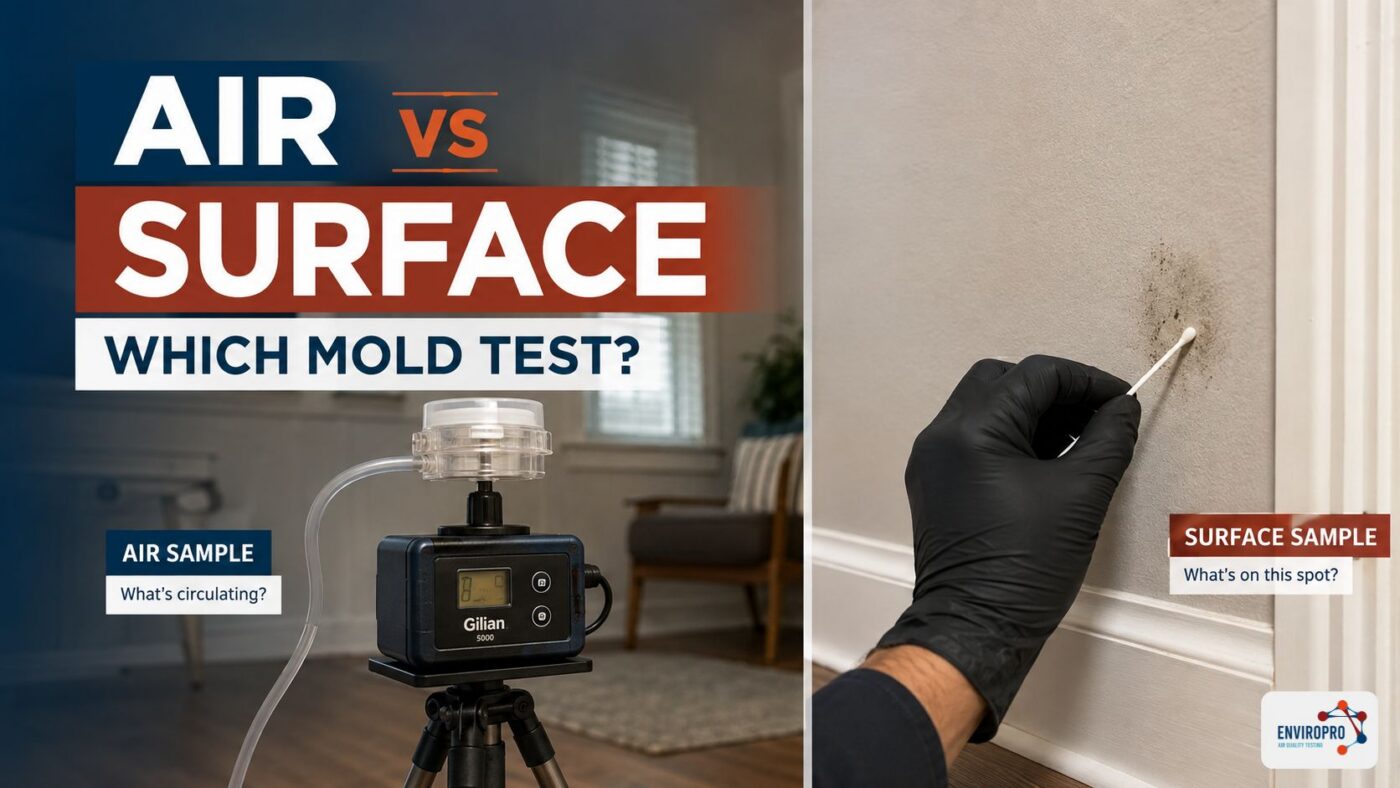
When comparing air mold testing vs surface mold testing, the right choice depends on the question you need answered. Air testing measures mold spores circulating in a room, while surface testing examines material collected from one specific spot. If you smell mold but cannot see it, air testing may provide useful clues. If you have […]
17
Aug
Aug
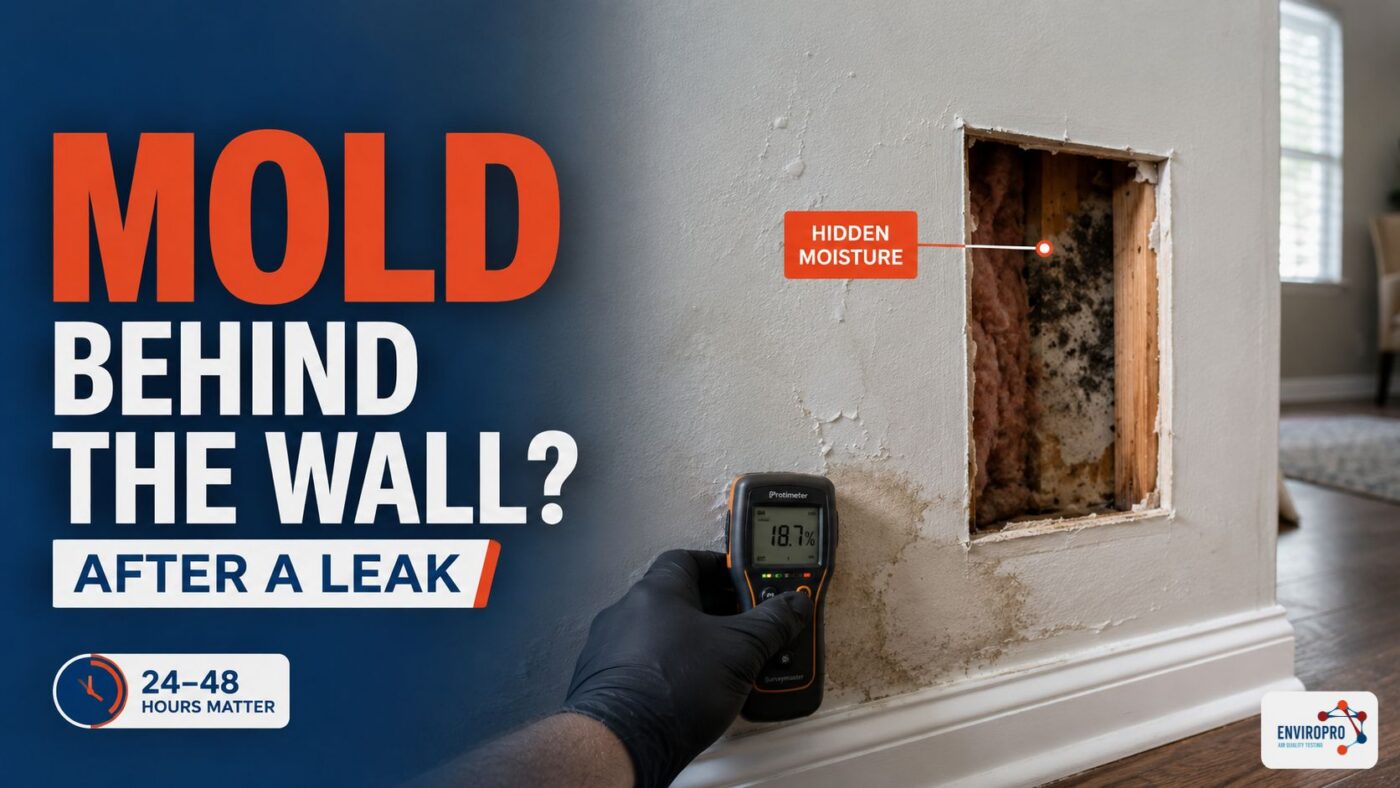
Yes, mold behind walls after a leak can develop when drywall, insulation, wood framing, or other materials remain damp. Fixing the pipe or roof stops additional water from entering, but it does not automatically dry moisture already trapped inside the wall. The U.S. Environmental Protection Agency recommends drying wet materials within 24–48 hours after a […]
11
Aug
Aug
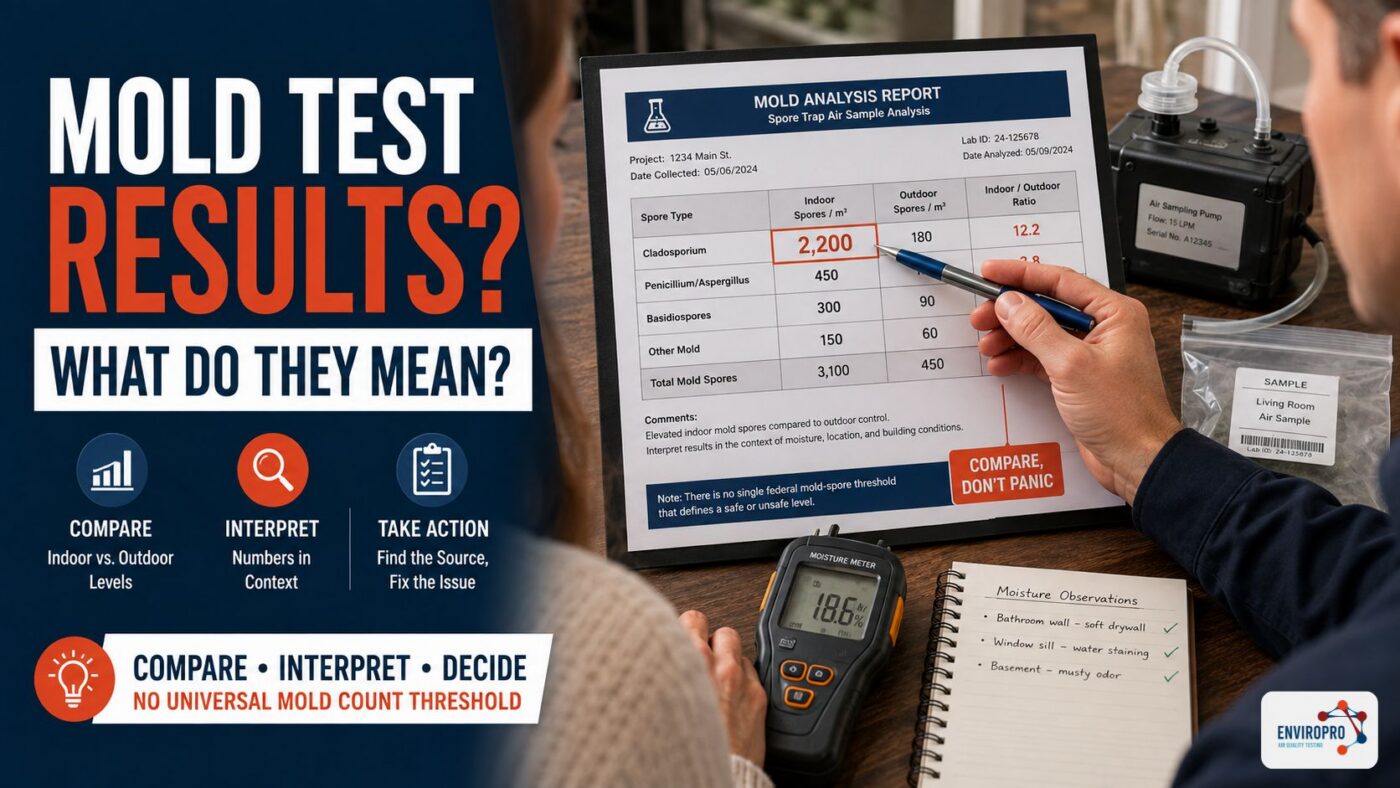
They show which mold spores or materials were detected in the samples, how much was found, and whether the indoor pattern suggests a possible mold source. The numbers should not be judged alone. A useful interpretation also considers the outdoor control sample, the rooms tested, visible damage, moisture readings, odors, and the type of sample […]
05
Aug
Aug
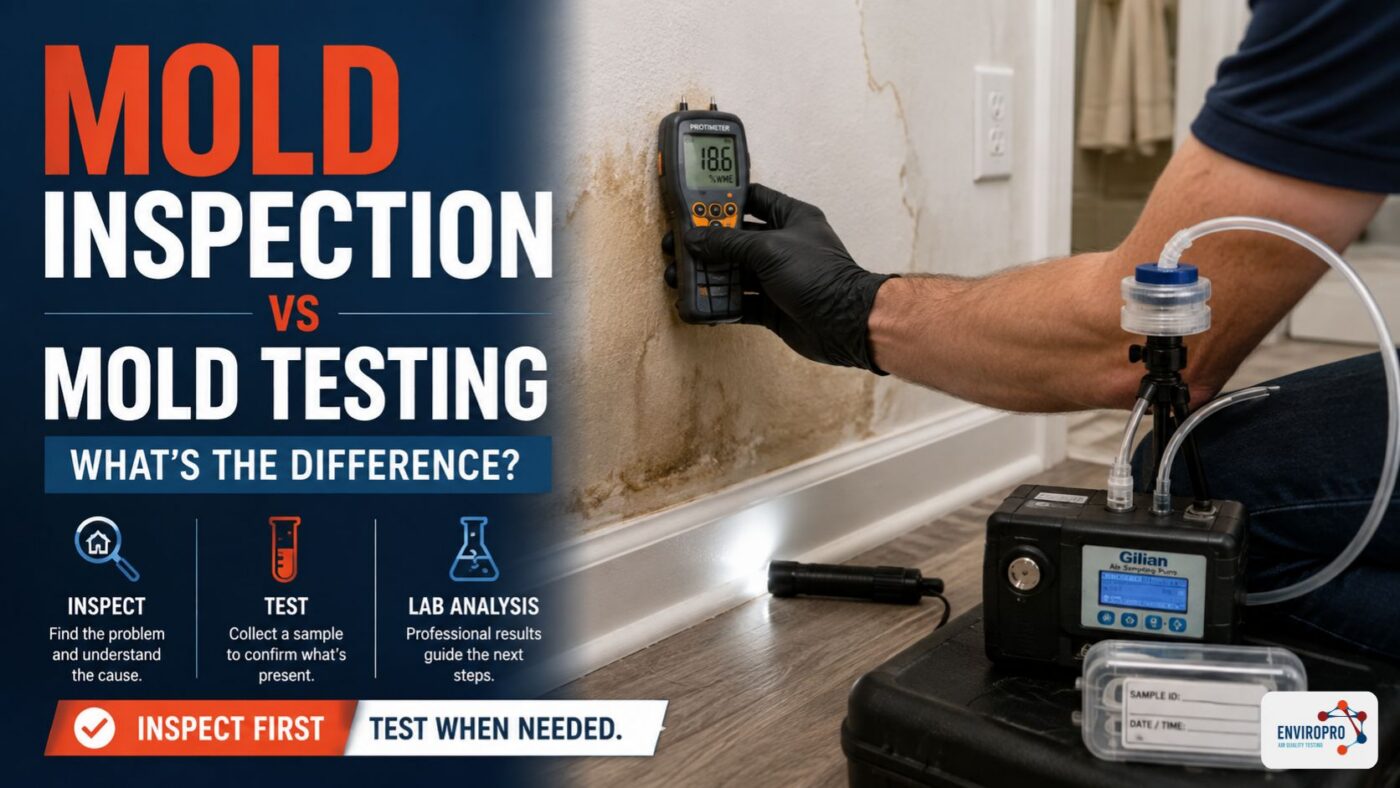
The difference between mold inspection vs mold testing is straightforward: a mold inspection examines the property for visible growth, water damage, excess moisture, and conditions that may support mold, while mold testing collects air, surface, or material samples for laboratory analysis. An inspection helps answer where the problem may be and what caused it; testing […]
25
Jul
Jul
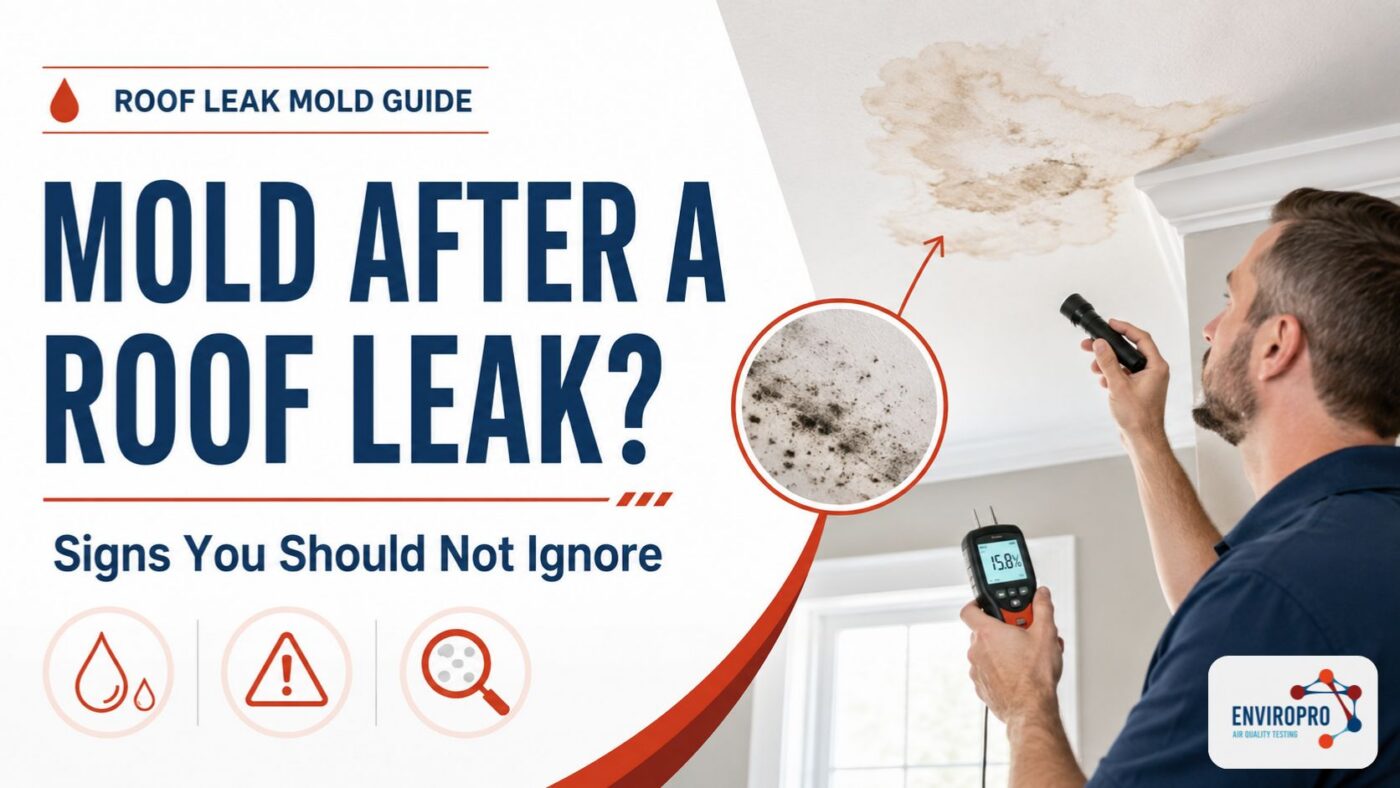
Mold after a roof leak can grow when moisture gets trapped in ceiling drywall, insulation, attic materials, or wall cavities. The signs you should not ignore include ceiling water stains, a musty odor, soft drywall, peeling paint, dark spots near vents or corners, and any stain that returns after rain. A roof repair stops new […]
20
Jul
Jul
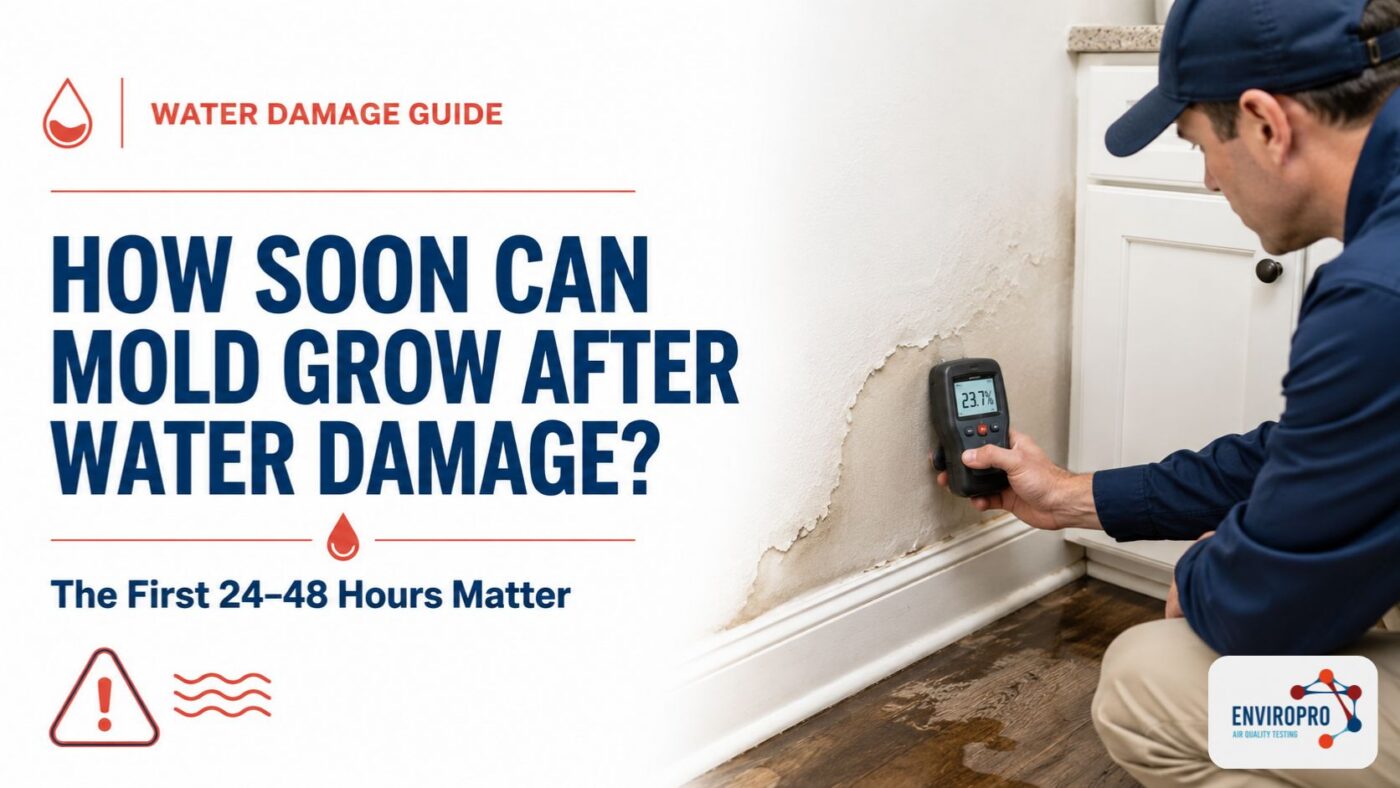
How soon can mold grow after water damage? In many homes, mold can begin developing within 24 to 48 hours if wet materials are not dried properly. That does not always mean you will see mold right away, but it does mean the moisture clock starts fast, especially when water reaches drywall, carpet padding, insulation, […]
15
Jul
Jul
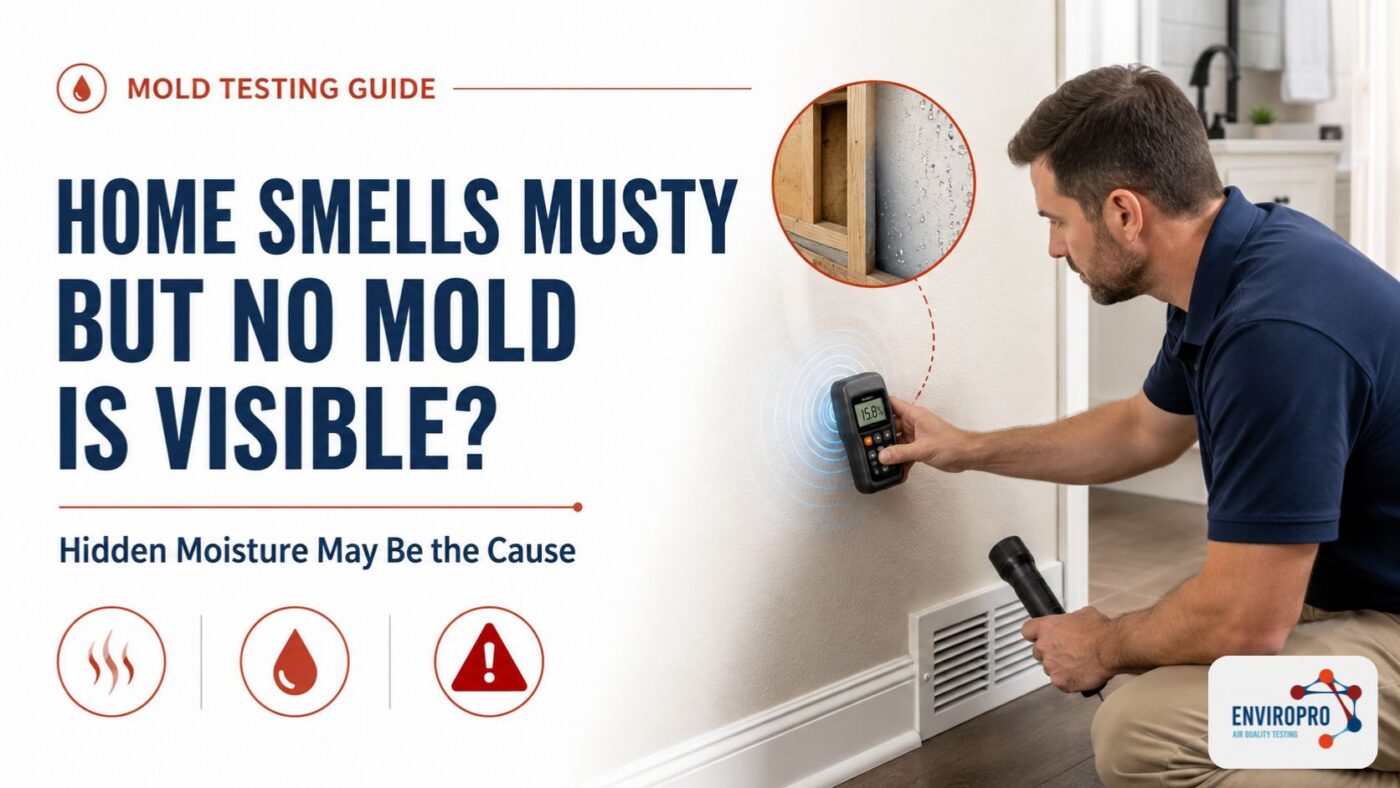
If your home smells musty but no mold is visible, the most likely cause is hidden moisture somewhere in the property. That moisture may be feeding hidden mold, mildew, bacteria, damp building materials, or stale air trapped in a poorly ventilated space. Sometimes the issue is not mold at all, but a leak, dirty HVAC […]
10
Jul
Jul
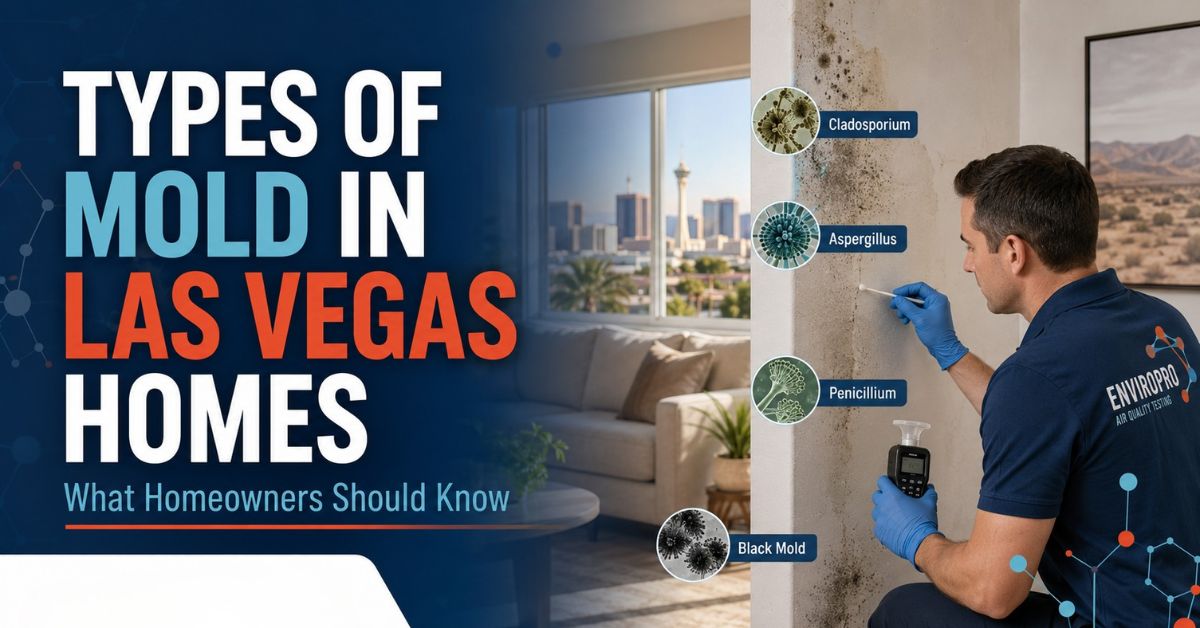
The most common types of mold in Las Vegas homes are Cladosporium, Aspergillus, and Penicillium. True “black mold” (Stachybotrys) shows up far less often than people expect. Despite the desert air outside, indoor moisture from swamp coolers, HVAC systems, plumbing leaks, and monsoon flooding creates the damp conditions mold needs to grow. If you’ve spotted […]
05
Jul
Jul
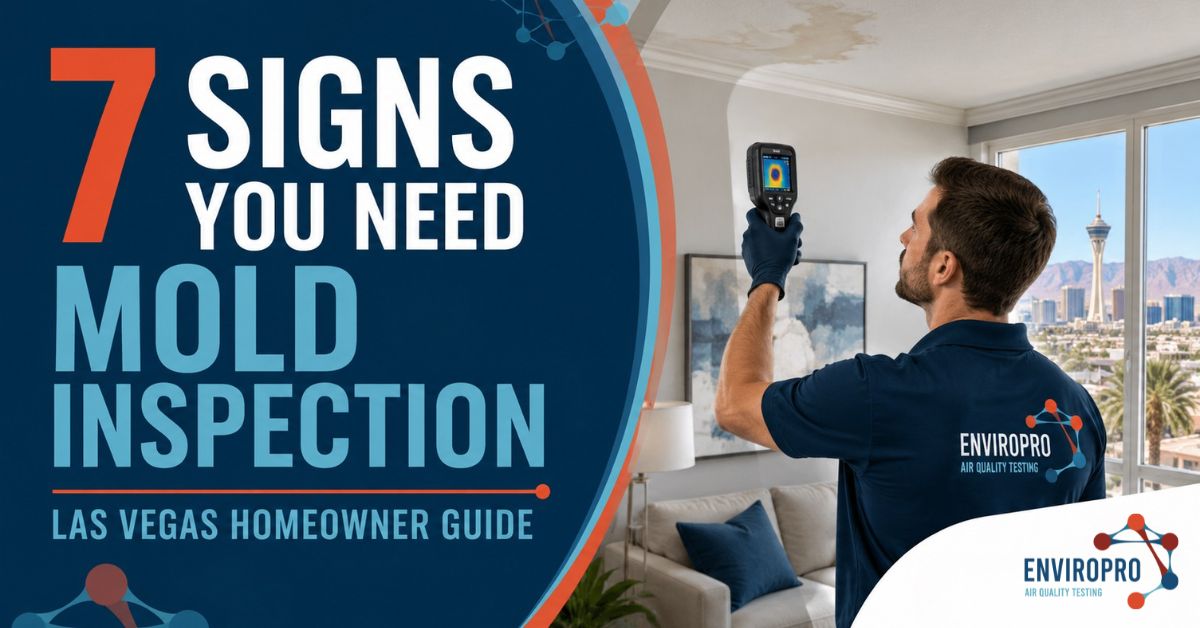
If you’ve landed here, you probably already suspect something. The short answer: you likely need a mold inspection when you can smell mold but can’t see it, when you’ve had water damage in the last year, or when people in the home feel better the moment they leave it. Those three situations are the ones […]